
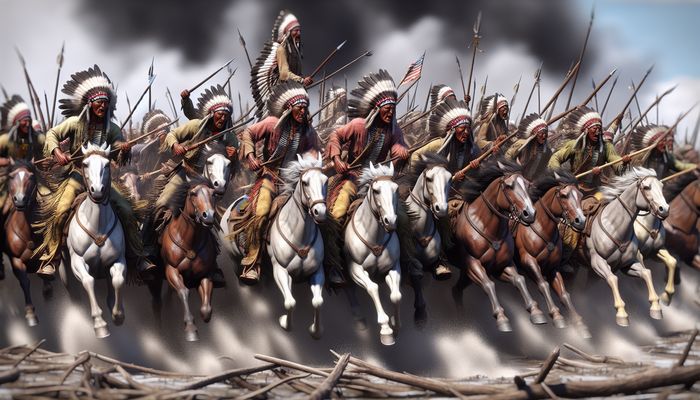
loola-games.info – The Lakota Nation, one of the largest and most influential Native American tribes, has a rich and complex history marked by resilience, culture, and a deep connection to the land. Originally part of the Sioux Nation, the Lakota people, who are sometimes referred to as the Teton Sioux, played a central role in shaping the history of the Great Plains and their struggle for survival and sovereignty against European settlers, the U.S. government, and the encroachment of modernity. This article explores the rise of the Lakota Nation, examining their early history, cultural developments, and the pivotal events that defined their emergence as a formidable force in Native American resistance.
Early History and the Formation of the Lakota Nation
The Lakota people trace their origins to the Great Lakes region, where their ancestors lived as part of the larger Sioux Nation. According to Lakota oral tradition, the tribe originated from the powerful spiritual connection to the Earth and the buffalo, a connection that would remain central to their way of life for centuries. The Lakota were historically known as a nomadic, warrior society, thriving on the vast resources of the Great Plains.
The Lakota people became distinct from other Sioux groups as they migrated westward, driven by the necessity to find more bison hunting grounds and evade conflicts with rival tribes. By the 18th century, the Lakota had established themselves as a dominant force on the Great Plains, spanning territories that stretched across present-day North and South Dakota, Montana, Wyoming, Nebraska, and parts of Canada.
Their mastery of horse culture, which they acquired from European settlers in the 17th century, allowed them to expand their territory further and solidify their position as one of the most formidable warrior societies in North America. With horses, the Lakota were able to hunt bison with greater efficiency, defend their territory, and engage in warfare with neighboring tribes and settler forces.
Lakota Culture and Society
At the heart of the Lakota way of life was a deep spiritual connection to nature, particularly the buffalo, which provided sustenance, clothing, and tools. Lakota people believed that the buffalo was a gift from the Creator, and their survival depended on maintaining a harmonious relationship with the land and the animals that inhabited it. This reverence for nature is reflected in their rituals, ceremonies, and the societal structure that governed their lives.
The Lakota organized their society into bands, each with its own leader known as a chief or wicasa wakan (holy man). While chiefs were not absolute rulers, they were respected for their wisdom, leadership, and ability to maintain peace within the community. The Lakota operated under a clan-based structure, with roles for men, women, and children that ensured the survival and well-being of the group. Elders played an essential role in guiding the younger generation and preserving the traditions and teachings of their ancestors.
Spiritual practices were central to Lakota life, with important ceremonies such as the Sun Dance and the Vision Quest. These rituals served to maintain the spiritual balance of the tribe, provide guidance, and honor the spiritual world. The Lakota were also known for their warrior society, where young men were trained to defend their people, engage in warfare, and protect the tribe’s resources.
The Rise of Resistance: Conflict with European Settlers
By the 19th century, the westward expansion of the United States and the influx of European settlers began to encroach on Lakota territory. The arrival of settlers brought new challenges, including the depletion of bison populations, the introduction of diseases, and conflicts over land. As the U.S. government sought to establish its presence in the West, tensions between the Lakota and settlers grew.
The Lakota people, who had long been accustomed to controlling vast stretches of land, faced increasing pressure from the U.S. government to cede their territory. In 1851, the Treaty of Fort Laramie was signed between the U.S. government and several Native American tribes, including the Lakota. However, despite initial agreements, the government failed to uphold its promises, and the Lakota were increasingly forced off their ancestral lands as settlers moved westward.
As a result, the Lakota entered into several conflicts with the U.S. military, including the famous Indian Wars of the late 19th century. The Lakota resisted American encroachment, fiercely defending their way of life, hunting grounds, and cultural practices. The resistance was led by prominent Lakota leaders, including Sitting Bull and Crazy Horse, both of whom would become legendary figures in the struggle for Native American sovereignty.
The Battle of Little Bighorn and the Height of Lakota Resistance
One of the defining moments in the rise of the Lakota Nation occurred in 1876, during the Battle of Little Bighorn, also known as Custer’s Last Stand. The Lakota, along with their allies from the Cheyenne and Arapaho nations, engaged in a decisive battle against the U.S. Army, led by Lieutenant Colonel George Armstrong Custer. The Lakota forces, under the leadership of Sitting Bull and Crazy Horse, achieved a resounding victory, killing Custer and many of his men.
This victory was seen as a powerful statement of resistance against U.S. military aggression and a reaffirmation of the Lakota Nation’s strength. However, the victory was short-lived. The U.S. government, enraged by the loss, launched a campaign to subdue the Lakota and other tribes in the region. Despite their victory, the Lakota were eventually forced onto reservations, and their way of life was forever altered.
The Wounded Knee Massacre: The End of Lakota Sovereignty
The Wounded Knee Massacre in 1890 marked a tragic turning point in the Lakota struggle. After years of forced displacement, famine, and the erosion of their traditional way of life, the Lakota were confined to the Pine Ridge Reservation in South Dakota. In December of that year, the U.S. Army attempted to disarm a group of Lakota men, women, and children who were gathered at Wounded Knee Creek. The confrontation escalated into a massacre, with hundreds of Lakota people killed by the U.S. Army.
The Wounded Knee Massacre is considered the final blow to Lakota sovereignty, as it marked the end of armed resistance to U.S. domination. The massacre symbolizes the devastating impact of colonization and the loss of Native American lands, culture, and lives. However, despite the tragedy, the spirit of the Lakota people remained unbroken.
Resilience and Revitalization in the 20th Century
Although the Lakota Nation faced tremendous adversity following Wounded Knee, the tribe’s resilience never waned. In the 20th century, the Lakota people continued to fight for their rights and the recognition of their sovereignty. The Indian Reorganization Act of 1934 provided some avenues for Native American self-governance, but the battle for land and rights continued.
In the 1960s and 1970s, the Lakota became involved in the American Indian Movement (AIM), advocating for the restoration of lands and the preservation of Native American cultures. The Lakota also sought justice for the historical wrongs they had suffered, including land loss, broken treaties, and the destruction of their way of life.
The legacy of figures like Sitting Bull and Crazy Horse continues to inspire Lakota activism and cultural revitalization. Today, the Lakota Nation remains an important cultural and political force, with a strong commitment to preserving its traditions, language, and way of life.
Conclusion: The Legacy of the Lakota Nation
The rise of the Lakota Nation is a story of strength, resilience, and an unyielding commitment to cultural survival. From their early history on the Great Plains to their resistance against settler colonialism and their fight for justice in the modern era, the Lakota people have endured immense challenges. Yet, through their resilience, they continue to thrive as a symbol of Native American identity, pride, and resistance.
The Lakota Nation’s history teaches the world about the importance of cultural preservation, sovereignty, and the ongoing fight for Indigenous rights. Despite centuries of hardship, the Lakota people remain a vital and vibrant part of American history, and their legacy will continue to inspire future generations in their ongoing journey toward justice and healing.