
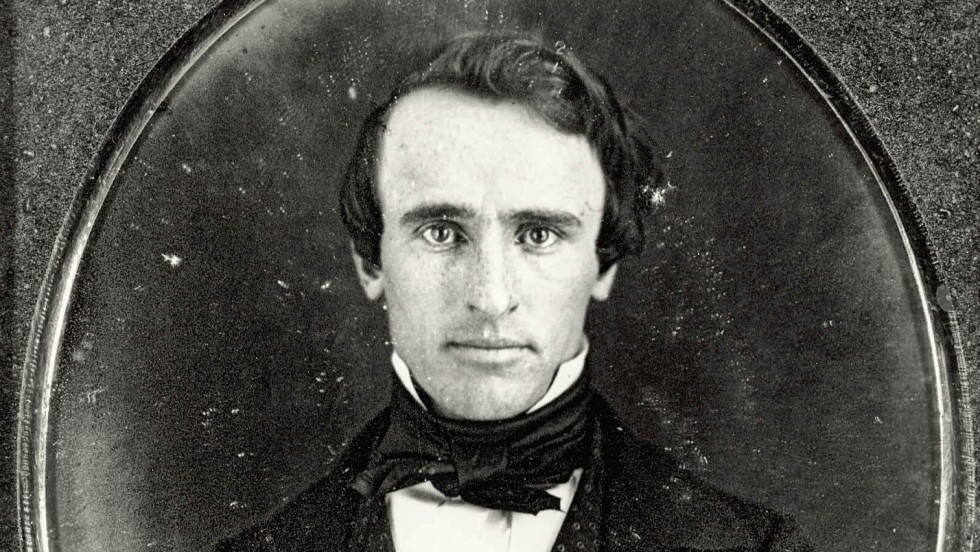
loola-games.info – The election of 1876 stands as one of the most contentious and controversial in the history of the United States. It was a contest marked by electoral fraud, a contested outcome, and political deals that would leave an indelible mark on the nation’s history. Rutherford B. Hayes, the Republican candidate, ultimately emerged victorious in one of the most disputed elections ever held, but the road to his presidency was far from smooth. The election of 1876 tested the very foundations of American democracy and demonstrated the deep divisions that continued to exist in the country in the aftermath of the Civil War and Reconstruction.
At the heart of the controversy was the bitter rivalry between Hayes, the governor of Ohio, and Samuel J. Tilden, the Democratic governor of New York. The election was marred by allegations of voter fraud, irregularities in vote counting, and accusations of disenfranchisement of African Americans in Southern states. As the results hung in the balance, a series of political compromises and backroom deals culminated in a decision that would shape the future of the United States. In this article, we will explore the events surrounding the 1876 election, the factors that made it so controversial, and how Rutherford B. Hayes ultimately became the 19th President of the United States.
Background: The Post-Civil War Political Landscape
Reconstruction and Its Challenges
By 1876, the United States was in the midst of the Reconstruction era, a period that followed the Civil War and aimed to rebuild the South, reintegrate former Confederate states into the Union, and secure the civil rights of newly freed African Americans. However, Reconstruction was deeply divisive, particularly in the South, where many white Southerners resisted the federal government’s efforts to implement civil rights protections for African Americans. The government had placed federal troops in the South to enforce Reconstruction policies, but by the mid-1870s, public support for Reconstruction had begun to wane.
The Republican Party, which had led the charge for Reconstruction and civil rights, faced growing opposition from Southern Democrats, who sought to restore white supremacy and disenfranchise African American voters. In this environment, the 1876 election would become a flashpoint in the ongoing struggle over the future of the South and the rights of African Americans.
The Candidates: Rutherford B. Hayes and Samuel J. Tilden
The two major contenders in the election of 1876 were Rutherford B. Hayes, a Republican, and Samuel J. Tilden, a Democrat. Hayes, a relatively low-profile figure, had served as governor of Ohio and had a reputation as a reform-minded, moderate politician. He was a staunch advocate for civil rights and had worked to enforce the law in Southern states during the Reconstruction era. Hayes was also known for his commitment to political reform and was seen as a figure who could help unite a divided nation.
Tilden, on the other hand, was a well-known political figure with a reputation for fighting corruption. As governor of New York, Tilden had earned a reputation as a “trustbuster” for his efforts to take down the powerful political machine of William “Boss” Tweed. His campaign focused on the need to clean up the government and end the corruption that had become synonymous with the post-Civil War political establishment. Tilden was also seen as more sympathetic to the South, advocating for the end of federal intervention in Southern politics and a return to “home rule.”
The election, therefore, was not only a contest between two men but also a reflection of the nation’s ongoing struggle over the direction of the country after the Civil War, particularly concerning the future of Reconstruction and the rights of African Americans.
The Election: Contested Results and Allegations of Fraud
The Vote Count and Disputes
On Election Day, November 7, 1876, the results were close and highly contentious. Tilden won the popular vote by a wide margin, securing 4,284,020 votes compared to Hayes’ 4,036,572. However, the outcome of the election hinged on the electoral vote, and here the results were far from clear.
The electoral vote was in dispute in several Southern states, including Florida, Louisiana, and South Carolina. These states had been under Republican control since the end of the Civil War, but Democrats, who had regained power in many Southern states, contested the results. In each of these states, both parties claimed victory, with allegations of voter fraud, intimidation, and the suppression of African American votes. The claims of fraud were particularly concerning in Southern states, where African Americans were a significant part of the electorate, and many had been disenfranchised through a combination of voter suppression tactics, intimidation, and outright violence.
In Florida, Louisiana, and South Carolina, both the Republicans and Democrats submitted competing sets of electoral votes, each claiming to have won the state. The situation was further complicated by disputes in Oregon, where one of the electors was disqualified for being an alleged “dual officeholder,” leading to another contested electoral vote.
The Role of Congress and the Electoral Commission
With no clear winner in the electoral vote, the election was thrown into Congress, where both parties struggled to reach an agreement on how to resolve the disputed votes. The Constitution dictated that the electoral votes must be counted in Congress, but it did not provide clear guidance on how to resolve disputes over contested votes. The situation was dire, and both parties feared the possibility of violence or civil unrest.
To resolve the crisis, Congress created a bipartisan Electoral Commission, which consisted of five senators, five representatives, and five Supreme Court justices. The commission’s task was to review the contested electoral votes and determine which candidate had won the election. The commission was heavily biased in favor of the Republicans, with seven of the 15 members being Republicans and only seven being Democrats, while one justice, David Davis, was initially chosen as an independent. However, Davis later recused himself, and the commission replaced him with a Republican justice, Joseph P. Bradley.
After several weeks of deliberation, the Electoral Commission voted along party lines to award all the disputed electoral votes to Hayes, thereby giving him a total of 185 electoral votes to Tilden’s 184. Tilden had won the popular vote but was denied the presidency due to the controversial decision of the Electoral Commission. Hayes was declared the winner of the 1876 election, but his victory was anything but conclusive, and it left a lasting stain on his presidency.
The Compromise of 1877: A Deal to Secure Hayes’ Presidency
The Deal: Federal Troops and the End of Reconstruction
As part of the negotiations to resolve the election dispute, Hayes made a significant concession to the Democrats in what became known as the Compromise of 1877. In exchange for the Democratic acceptance of Hayes’ victory, Republicans agreed to withdraw federal troops from the South, effectively bringing an end to Reconstruction. This deal had profound implications for the future of African Americans in the South, as it allowed white Democrats to regain control of Southern state governments and marked the beginning of the Jim Crow era.
The withdrawal of federal troops from the South meant that Southern states would once again be free to enact laws that disenfranchised African Americans, and it paved the way for the institutionalization of racial segregation and discrimination. The compromise was seen by many as a betrayal of the rights of African Americans, and it effectively ended the federal government’s commitment to enforcing civil rights in the South for nearly a century.
In addition to the withdrawal of troops, the Compromise of 1877 included other provisions aimed at appeasing Southern Democrats, such as federal support for Southern internal improvements, including railroad construction. Hayes’ agreement to these terms was a political necessity, as it allowed him to assume the presidency, but it also tarnished his legacy and left a lasting impact on race relations in America.
The Aftermath: The Legacy of the 1876 Election
The 1876 election and the subsequent Compromise of 1877 had far-reaching consequences for both Rutherford B. Hayes and the United States as a whole. Hayes’ victory, though legitimate under the circumstances, was widely viewed as illegitimate by many, and the events surrounding the election would continue to shape American politics for years to come.
Hayes’ Presidency and Its Political Challenges
Although Hayes assumed office in 1877, his presidency was overshadowed by the controversial circumstances surrounding his election. Despite his victory, Hayes struggled to establish his political legitimacy. Many Democrats and some Republicans believed that his election had been the result of political manipulation, and they viewed him as a “compromise” president, rather than one with a clear mandate from the people.
Hayes worked to make civil service reform a central issue of his presidency, pushing for the creation of a merit-based system for government appointments, and he focused on improving the nation’s economy and infrastructure. However, the specter of the 1876 election and the subsequent compromise with Southern Democrats loomed over his administration. His decision to pull federal troops out of the South was seen by many as a failure to protect the rights of African Americans, and it was a decision that would haunt his legacy.
The End of Reconstruction and the Rise of Jim Crow
The most lasting consequence of the 1876 election and the Compromise of 1877 was the end of Reconstruction and the subsequent rise of Jim Crow laws in the South. With the federal government’s withdrawal from the South, white Southerners regained control over state governments and implemented discriminatory laws designed to disenfranchise African Americans and segregate the races. These laws would remain in place for nearly a century, until the Civil Rights Movement of the 1960s.
The Compromise of 1877 marked the end of an era in American history—a time when the federal government had made efforts to guarantee civil rights and equality for African Americans in the South. The legacy of the election of 1876, and the deal that secured Hayes’ presidency, would have lasting implications for race relations in the United States, and it would take decades for the full promise of Reconstruction to be realized.
Conclusion
The election of 1876 remains one of the most controversial and pivotal moments in American history. Rutherford B. Hayes’ victory, secured through a highly contested process and a political compromise, underscored the deep divisions in the country following the Civil War and Reconstruction. While Hayes’ presidency ultimately brought some much-needed reforms, including efforts to curtail political corruption, it was forever marked by the compromise that ended Reconstruction and abandoned the federal commitment to African American rights in the South. The aftermath of the election would set the stage for the Jim Crow era and the long struggle for civil rights that would follow.