loola-games.info – Lionel Messi is widely regarded as one of the greatest footballers to ever play the game. Known for his extraordinary skills, vision, and ability to score goals, Messi’s impact on the sport is immeasurable. Over the course of his remarkable career, Messi has achieved incredible success, both at the club level and internationally, earning countless accolades and inspiring millions of fans worldwide. This article explores his life, career, and the legacy of a true football icon.
Early Life and Beginnings in Football
Lionel Andrés Messi was born on June 24, 1987, in Rosario, Argentina, into a working-class family. From an early age, Messi displayed an extraordinary talent for football, capturing the attention of those around him. However, his early years in the sport were not without challenges, particularly due to health issues that threatened his future in football.
The Challenges of Growth Hormone Deficiency
At the age of 11, Messi was diagnosed with a growth hormone deficiency (GHD), which caused him to be much smaller than his peers. His condition required expensive treatment, and his family struggled to afford the necessary medication. However, Messi’s extraordinary talent on the field did not go unnoticed.
At the age of 13, Messi moved to Spain to join FC Barcelona’s famed youth academy, La Masia. Barcelona offered to pay for Messi’s medical treatment in exchange for his commitment to the club, and this marked the beginning of Messi’s rise to stardom.
Joining Barcelona’s La Masia Academy
Messi’s move to Barcelona at such a young age was a major turning point in his life. At La Masia, he continued his football development while receiving the medical care he needed. Despite his small stature, Messi’s incredible dribbling skills, vision, and technical ability stood out, and it quickly became clear that he was destined for greatness.
The Rise to Prominence at FC Barcelona
Lionel Messi’s journey at Barcelona was one of meteoric rise. His ability to perform at the highest level, despite his size, made him a standout player from the very beginning. Over the years, Messi became the heart and soul of the team, leading Barcelona to unprecedented success.
Debut with the Senior Team and Early Years
Messi made his debut for Barcelona’s first team in 2004 at the age of 17, and it didn’t take long for him to prove his worth. In his early years, he was part of a team that featured other great players like Ronaldinho, Samuel Eto’o, and Xavi Hernandez. Although Messi was still developing, his exceptional skills and flair were evident from the start.
By the 2006-2007 season, Messi had become a regular starter for Barcelona, and his performances continued to improve. He scored his first La Liga goal in 2005 and soon became one of the most feared attackers in Europe. His combination of dribbling, passing, and finishing was unmatched, and he quickly established himself as one of the top players in world football.
Dominating with Barcelona: Unprecedented Success
Messi’s time at Barcelona saw the club reach unprecedented heights. Under the guidance of coach Pep Guardiola, Barcelona revolutionized the game with their style of play, known as “tiki-taka,” which emphasized quick, short passes and possession. Messi was the focal point of this system, and his brilliance on the field helped Barcelona dominate European and Spanish football.
During his time at Barcelona, Messi won numerous domestic and international titles, including:
- Ten La Liga titles
- Seven Copa del Rey titles
- Four UEFA Champions League titles
Messi’s individual performances were equally remarkable, as he won multiple Ballon d’Or awards, cementing his place as one of the greatest players of all time.
Record-Breaking Performances
In 2012, Messi achieved an extraordinary feat by scoring 91 goals in a calendar year, breaking Gerd Müller’s long-standing record of 85 goals. This remarkable achievement further solidified Messi’s legacy as one of the most prolific goal-scorers in the history of football.
Over the years, Messi continued to break records, becoming Barcelona’s all-time top scorer, as well as La Liga’s all-time top scorer. His vision, dribbling ability, and incredible consistency on the field made him a unique talent, and his performances helped elevate Barcelona to a level of dominance that few clubs have ever achieved.
A New Chapter: Messi’s Move to Paris Saint-Germain (PSG)
In August 2021, Messi’s long and successful career at Barcelona came to an end due to financial difficulties at the club. Barcelona was unable to renew Messi’s contract due to La Liga’s salary cap regulations, and Messi moved to Paris Saint-Germain (PSG) on a free transfer. The move to PSG marked a new chapter in Messi’s career, as he joined a team of already established superstars, including Neymar and Kylian Mbappé.
Messi’s Impact at PSG
Although Messi’s time at PSG has been relatively short, his arrival has already made a significant impact. In his first season with the club, Messi contributed goals and assists and played an important role in PSG winning the 2022 French Ligue 1 title. His presence has further raised the profile of PSG and attracted global attention to the club.
At PSG, Messi has been able to form new partnerships with world-class players, and his performances continue to showcase his brilliance. Despite being in the latter stages of his career, Messi’s ability to influence games and perform at the highest level remains intact.
Messi and Argentina: Triumph on the International Stage
While Messi’s club career has been highly successful, his journey with the Argentina national team has had its share of ups and downs. Messi was often criticized for not replicating his club success on the international stage, particularly after Argentina’s losses in the 2014 FIFA World Cup final and in several Copa América tournaments.
Copa América Glory in 2021
Messi’s dedication to the Argentina national team was rewarded in 2021 when he led his country to victory in the Copa América. Argentina defeated Brazil 1-0 in the final, and Messi’s leadership and performances throughout the tournament were instrumental in securing the trophy. This victory was especially meaningful for Messi, as it marked his first major international title with Argentina and silenced critics who questioned his ability to succeed on the international stage.
The 2022 FIFA World Cup and Messi’s Legacy
The 2022 FIFA World Cup in Qatar was expected to be Messi’s last World Cup, and it was the perfect opportunity for him to secure his place as the greatest player of all time. Messi’s performances during the tournament were exceptional, as he led Argentina to the final and played a pivotal role in their success. His ability to score goals, create assists, and lead the team with his experience made him the tournament’s standout player.
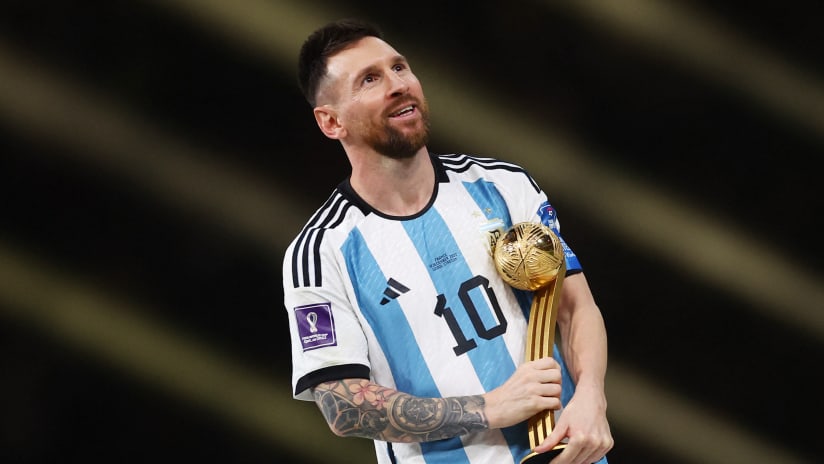
In the final, Argentina defeated France in a thrilling match, with Messi scoring twice and winning the Golden Ball award as the tournament’s best player. This victory secured Messi’s status as one of the greatest players in the history of the sport, and it completed his collection of major international titles.
Lionel Messi’s Legacy: The Greatest of All Time?
Lionel Messi’s career has been defined by his extraordinary consistency, unparalleled skill, and passion for the game. He is widely regarded as one of the greatest footballers to ever play the sport, alongside legends such as Pelé, Diego Maradona, and Cristiano Ronaldo.
Records and Achievements
Messi’s list of individual records and achievements is truly remarkable. He is:
- Barcelona’s all-time top scorer
- La Liga’s all-time top scorer
- The only player to have won seven Ballon d’Or awards
- The player with the most goals in a calendar year (91 goals in 2012)
Messi has also won over 35 major trophies during his career, including numerous league titles, Champions League trophies, and domestic cups. His contributions to the game have earned him widespread recognition, and his influence on the sport will last for generations to come.
A Global Icon
Off the pitch, Messi is a global icon. His humility, work ethic, and dedication to his craft have made him a role model for millions of people around the world. He has also been involved in various charitable efforts, including his own foundation, which supports children’s health and education.
Messi vs. Ronaldo: The Greatest Debate
The debate over who is the greatest footballer of all time—Messi or Cristiano Ronaldo—has been a long-standing discussion among fans, pundits, and players alike. Both Messi and Ronaldo have dominated the football world for over a decade, and their rivalry has fueled countless comparisons.
While both players have achieved remarkable success, Messi’s unique combination of dribbling, vision, playmaking, and goal-scoring ability sets him apart. His natural talent, coupled with his humility and dedication, has made him the darling of football fans worldwide.
Conclusion
Lionel Messi’s journey from a young boy with a growth hormone deficiency to one of the greatest footballers the world has ever seen is a story of perseverance, dedication, and brilliance. His incredible skill, vision, and consistency have earned him the admiration of millions and the respect of his peers. Messi’s legacy as one of the greatest players in the history of football is secure, and his influence on the game will continue to inspire future generations of players and fans.