loola-games.info – Wildebeest, also known as gnu, are iconic antelopes of the African savanna, belonging to the genus Connochaetes. These robust herbivores are most famous for their spectacular annual migrations, a breathtaking display of nature’s power that involves millions of individuals traversing vast distances in search of grazing pastures and water. This article delves into the fascinating world of wildebeest, exploring their physical characteristics, complex social behavior, crucial ecological role, and the challenges they face in a changing world.
Physical Characteristics: Adapted for a Nomadic Life
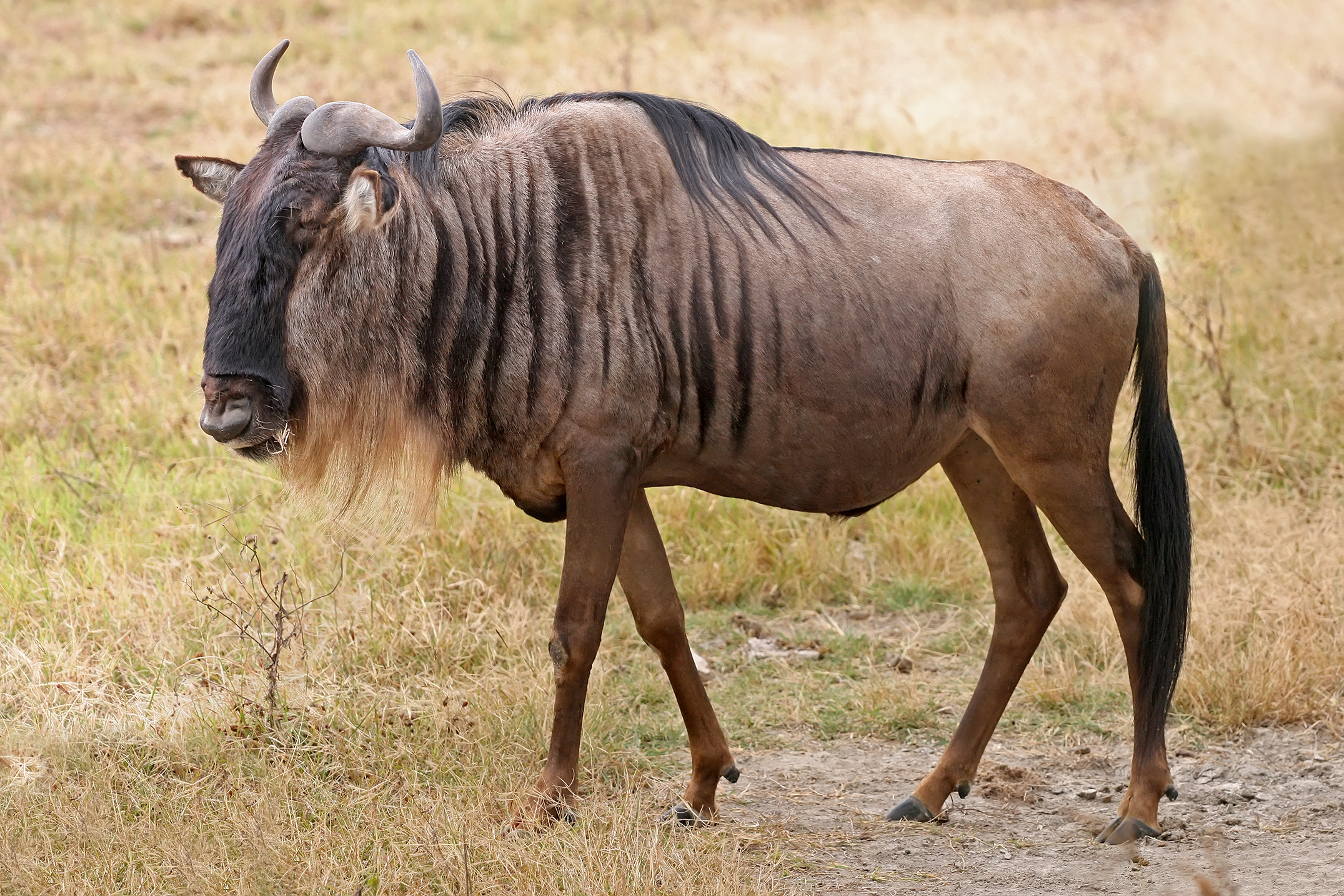
Wildebeest possess a distinctive appearance, combining features of cattle, horses, and antelopes.
- Size and Build: They are large antelopes, standing 1.1 to 1.5 meters (3.6 to 4.9 feet) tall at the shoulder and weighing between 120 and 270 kg (260 and 600 lbs). Their robust build and powerful legs are well-suited for long-distance travel.
- Distinctive Features: They have a sloping back, giving them a somewhat hunched appearance, a horse-like face with a broad muzzle, a dark mane, and a long, flowing tail.
- Horns: Both males and females possess curved horns, which they use for defense against predators and for establishing dominance within the herd.
- Coat Color and Patterns: Coat color varies between the two species. Blue wildebeest have a bluish-gray coat with dark vertical stripes, while black wildebeest have a dark brown to black coat with a white tail.
Behavior and Social Structure: A Life of Movement and Interaction
Wildebeest are highly social animals, forming large herds that exhibit complex social behaviors.
- Herd Dynamics: During the dry season, wildebeest congregate in massive herds, sometimes numbering in the hundreds of thousands or even millions. These large aggregations offer protection from predators through sheer numbers.
- The Great Migration: The most iconic behavior of wildebeest is their annual migration, driven by the search for fresh grazing pastures and water. They follow the seasonal rains in a clockwise circuit across the Serengeti ecosystem in Tanzania and the Masai Mara in Kenya.
- Calving Season Synchrony: Wildebeest have a highly synchronized calving season, with hundreds of thousands of calves born within a short period, usually at the beginning of the rainy season. This “predator satiation” strategy increases the survival chances of individual calves.
- Social Interactions and Communication: Wildebeest communicate through a variety of vocalizations, including grunts, snorts, and bellows. They also use visual signals, such as head movements and body postures, to convey information within the herd.
Ecology and Habitat: Shaping the Savanna Landscape
Wildebeest play a vital role in shaping the African savanna ecosystem.
- Grazing and Vegetation Dynamics: Their intensive grazing patterns influence vegetation structure and composition, preventing the dominance of any single plant species and maintaining biodiversity. They also stimulate new plant growth through grazing and trampling.
- Nutrient Cycling: Their dung and urine contribute to nutrient cycling, enriching the soil and promoting plant growth.
- Food Source for Predators: Wildebeest are a crucial food source for a wide range of predators, including lions, hyenas, wild dogs, cheetahs, and crocodiles.
- Habitat Preferences: They inhabit open grasslands, savannas, and open woodlands, requiring access to water sources.
Species of Wildebeest: Two Distinct Forms
There are two distinct species of wildebeest:
- Blue Wildebeest (Connochaetes taurinus): Also known as the common wildebeest, this is the more widespread and numerous species. It is found in southern and eastern Africa.
- Black Wildebeest (Connochaetes gnou): Also known as the white-tailed gnu, this species is restricted to southern Africa and has a distinct dark brown to black coat and a white tail.
The Great Migration: A Symphony of Movement and Survival
The annual wildebeest migration is one of the most spectacular wildlife events on Earth, a testament to the power of natural selection and adaptation.
- The Journey and Timing: The migration follows a roughly circular route, driven by rainfall patterns and the availability of green pastures. The timing and specific routes can vary slightly from year to year depending on local conditions.
- River Crossings: A Test of Endurance: The dramatic river crossings, particularly the Mara River crossing, are iconic moments of the migration. Wildebeest face the dangers of strong currents, steep banks, and predators like crocodiles.
- Challenges and Mortality: The migration is a perilous journey, with wildebeest facing threats from predators, starvation, thirst, exhaustion, and drowning during river crossings.
Threats and Conservation: Navigating a Changing World
Wildebeest face several threats that impact their populations and the integrity of their migrations.
- Habitat Loss and Fragmentation: The conversion of grasslands to agricultural land, human settlements, and infrastructure development reduces available grazing pastures and disrupts migration routes.
- Barriers to Migration: Fences, roads, and other human-made barriers can block traditional migration routes, preventing wildebeest from accessing essential resources and fragmenting populations.
- Poaching and Bushmeat Hunting: While not as heavily targeted as some other species, wildebeest are sometimes poached for their meat.
- Climate Change and Drought: Changes in rainfall patterns, increased frequency of droughts, and other climate change impacts can affect the availability of grazing pastures and water, impacting wildebeest populations and migration patterns.
Conservation Efforts: Protecting the Future of the Migration
Protecting the wildebeest migration requires a collaborative and multifaceted approach.
- Protected Areas and Wildlife Corridors: Establishing and effectively managing protected areas, such as national parks and reserves, is crucial for safeguarding wildebeest habitat and migration routes. Maintaining and protecting wildlife corridors that connect different protected areas is also essential.
- Community Conservation and Land Use Planning: Engaging local communities in conservation efforts, promoting sustainable land use practices, and mitigating human-wildlife conflict are crucial for long-term success.
- Anti-Poaching Measures and Law Enforcement: Implementing effective anti-poaching patrols and strengthening law enforcement are essential for combating poaching and illegal wildlife trade.
- Monitoring and Research: Ongoing monitoring and research are vital for understanding wildebeest populations, migration patterns, and the impacts of various threats, allowing for adaptive management strategies.
Conclusion: A Symbol of the African Wild and a Call for Conservation Action
The wildebeest, with its spectacular migrations and crucial role in the African savanna ecosystem, is a true symbol of the African wild. Protecting these magnificent animals and their breathtaking migrations requires continued conservation efforts, international cooperation, and a commitment to preserving the integrity of their habitat. By working together, we can ensure that future generations can witness this awe-inspiring natural wonder.