
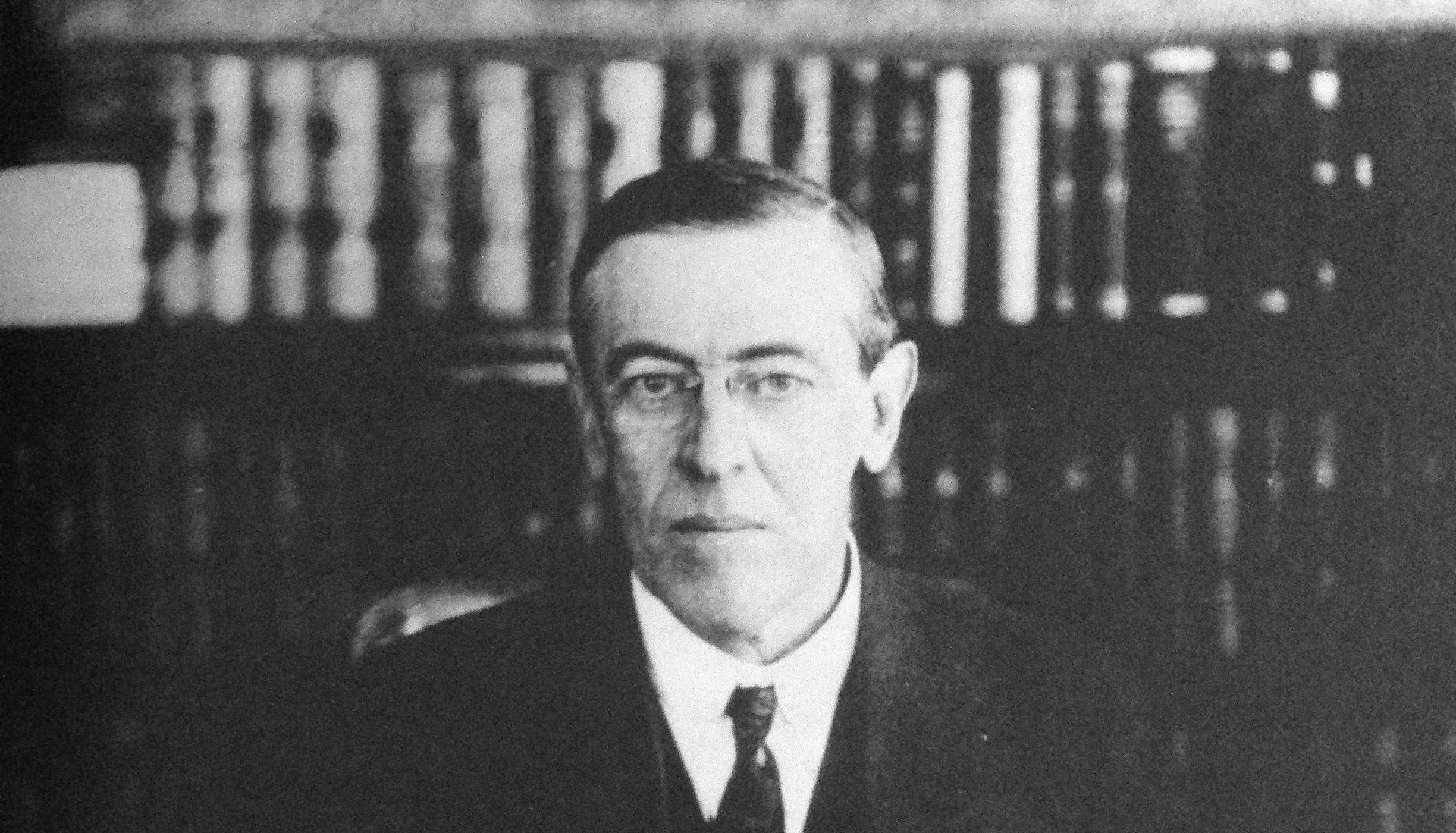
Woodrow Wilson and the Evolution of American Foreign Policy

loola-games.info – Woodrow Wilson’s presidency, which spanned from 1913 to 1921, marked a defining moment in the evolution of American foreign policy. As the 28th president of the United States, Wilson redefined the nation’s role in the world and navigated the country through the global turmoil of World War I. His vision of America’s place in the world was influenced by his progressive ideals, moral diplomacy, and idealistic belief in spreading democracy. Yet, Wilson’s foreign policy was also shaped by the practical realities of international politics, the complex nature of European alliances, and the growing power of the United States on the global stage.

Wilson’s approach to foreign policy reflected a departure from the isolationist tradition that had characterized much of the 19th century. His presidency marked a shift toward more active engagement in global affairs, as he sought to assert the United States’ influence in shaping both regional and global peace. However, Wilson’s idealism was not always in sync with the challenges and complexities of international relations, and his efforts to shape a new world order were sometimes thwarted by political opposition at home and resistance from foreign powers abroad.

This article explores the evolution of Woodrow Wilson’s foreign policy, from his early principles of moral diplomacy to his involvement in World War I, the formulation of the Fourteen Points, and his efforts to create the League of Nations. It examines the challenges he faced in reconciling his ideals with the practical realities of diplomacy, and how his legacy reshaped the course of American foreign policy for generations.

Early Foundations: Wilson’s Moral Diplomacy

Moral Diplomacy: A New Approach to International Relations

When Wilson assumed office in 1913, the United States had largely adhered to an isolationist foreign policy, avoiding deep entanglements in European conflicts and limiting its role in international affairs. However, Wilson was committed to challenging this traditional approach. He rejected the realpolitik approach of previous presidents such as Theodore Roosevelt and William Howard Taft, who had been willing to use military force and imperialistic tactics to protect American interests abroad.

Wilson introduced a new philosophy of foreign policy known as “moral diplomacy”. This concept was rooted in Wilson’s belief that the United States should use its power and influence in the world not for personal or economic gain, but to promote democracy, human rights, and justice. He believed that American diplomacy should be grounded in ethical principles and that the United States had a duty to promote democratic governments, particularly in Latin America and the Caribbean.

One of Wilson’s earliest acts of moral diplomacy came in Mexico. When Mexican President Victoriano Huerta seized power in 1913 following a coup, Wilson refused to recognize the legitimacy of his government, calling it “a government of butchers.” Wilson sought to promote democracy in Mexico by supporting the anti-Huerta forces, leading to American involvement in the Mexican Revolution. Although Wilson was committed to promoting democratic values, his intervention in Mexico was controversial and, in some ways, reflected the complexity of Wilson’s foreign policy—his moral idealism clashed with the pragmatic realities of intervention.

Interventions in Latin America

Wilson’s policies in Latin America also saw further manifestations of moral diplomacy. In countries like Haiti and the Dominican Republic, Wilson justified military interventions as a means of stabilizing governments and promoting democracy, often citing the need to prevent European intervention in the Western Hemisphere under the Monroe Doctrine. However, these interventions were frequently viewed as imperialistic by Latin Americans, who saw them as attempts to impose U.S. control in the region.

Wilson’s administration engaged in a series of military occupations in the Caribbean and Central America, including Haiti (1915) and the Dominican Republic (1916). These interventions were aimed at maintaining stability and ensuring that U.S. interests—such as access to trade routes, resources, and maintaining political influence—were protected. Despite Wilson’s stated commitment to moral diplomacy, these actions often resulted in the suppression of local populations and the imposition of American control over sovereign nations.

Thus, while Wilson espoused a moral approach to diplomacy, his actions in Latin America revealed the limits of his idealism. Interventions in the region underscored the tension between Wilson’s professed values and the national interests that often dictated his policies.

World War I: The Shift from Neutrality to Engagement

The Neutrality Dilemma

Wilson’s foreign policy was largely defined by his initial commitment to neutrality during the outbreak of World War I in 1914. Despite the fact that European powers had plunged into a brutal conflict, Wilson believed that the United States should remain uninvolved and focus on domestic reforms. The war, for Wilson, represented a European conflict, and he argued that America’s role should be to remain neutral while continuing to trade with all sides.

However, Wilson’s position of neutrality was challenged by a number of factors. The German submarine campaign, which targeted neutral ships—including American merchant vessels—was one of the main reasons for a shift in U.S. policy. The sinking of the Lusitania in 1915, which killed 128 Americans, further inflamed American public opinion against Germany. In addition, British naval blockades of German ports affected American trade, further complicating Wilson’s stance of neutrality.

Entering the War: The Moral Justification

In April 1917, after years of attempting to mediate a peace settlement, Wilson finally asked Congress to declare war on Germany. His justification for entering the war was moral: Wilson argued that the United States needed to fight to “make the world safe for democracy.” He framed the war as a battle between autocratic and democratic nations, positioning the United States as a champion of freedom and justice on the global stage.

Wilson’s decision to enter the war was not universally popular, and many Americans, particularly those with German and Irish roots, opposed intervention. However, Wilson’s speeches and his framing of the war as a crusade for democracy garnered significant support, and he was able to rally the nation behind the cause.

The Fourteen Points: Wilson’s Vision for a Post-War World

As the war continued, Wilson sought to shape the post-war settlement through his Fourteen Points, a set of principles he outlined in January 1918. The Fourteen Points included provisions for open diplomacy, freedom of the seas, free trade, and the creation of a League of Nations that would mediate international disputes and promote collective security.

Wilson’s vision for a just and lasting peace was in stark contrast to the punitive approach that was being advocated by the European powers, particularly France and Britain. Wilson believed that the war’s aftermath should not focus on revenge or territorial gain but on establishing a framework for peace based on international cooperation and self-determination.

However, when the war ended and the Treaty of Versailles was negotiated, Wilson’s idealism collided with the realpolitik of the European powers. Although his League of Nations was included in the treaty, many of his other points, such as self-determination for various peoples, were either compromised or ignored. The treaty imposed harsh reparations on Germany, and many of Wilson’s vision for a peaceful, democratic world order was diluted by the competing interests of the victorious powers.

The League of Nations and the Battle for American Involvement

The League of Nations: Wilson’s Greatest Ambition

Wilson’s most ambitious foreign policy initiative was the creation of the League of Nations, an international organization aimed at ensuring collective security and preventing future conflicts. The League was a cornerstone of Wilson’s Fourteen Points and reflected his idealistic belief in international cooperation.

The League’s primary goal was to provide a forum for nations to resolve disputes peacefully and prevent the escalation of conflicts into full-scale wars. Wilson believed that the United States, as the world’s leading democratic power, had a responsibility to be at the center of this effort.

The Senate Rejection and the Failure of the League

Despite Wilson’s efforts to sell the League to the American public, the U.S. Senate rejected the Treaty of Versailles and, by extension, American membership in the League of Nations. Senate opponents, led by Republican leaders such as Henry Cabot Lodge, argued that joining the League would entangle the United States in international conflicts and undermine its sovereignty. The Senate’s refusal to ratify the treaty was a devastating blow to Wilson’s vision and left the League without the participation of the United States, one of the world’s most powerful nations.

Wilson’s health, which had deteriorated during the war, further hampered his ability to secure support for the treaty. His failure to bring the treaty to fruition marked the beginning of a period of isolationism in U.S. foreign policy, as the country retreated from international affairs and sought to focus on domestic concerns.

The Evolution of Wilson’s Foreign Policy: A Legacy of Idealism and Realism

Woodrow Wilson’s foreign policy represented a significant shift in the United States’ approach to global diplomacy. While he entered office as an advocate of neutrality and moral diplomacy, the realities of global conflict and the rise of the United States as a global power pushed him toward a more active role on the world stage.

Wilson’s legacy in American foreign policy is marked by a tension between his idealism and the political realities he faced. His efforts to promote democracy, prevent war, and create international institutions like the League of Nations laid the groundwork for future American diplomacy. However, his idealistic vision was often challenged by the complexities of international relations, and his failure to secure U.S. participation in the League of Nations marked the limits of his influence.

Ultimately, Wilson’s foreign policy shifted American foreign relations toward a more interventionist approach, even as it remained tethered to the ideals of democracy and international cooperation. His presidency represents both the high aspirations and the contradictions of American foreign policy, and his influence is still felt in debates over U.S. involvement in global affairs.
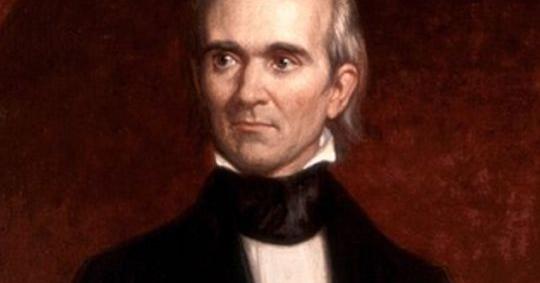
James K. Polk’s Foreign Policy and the Shaping of a Nation

loola-games.info – James K. Polk, the 11th President of the United States, is often hailed as one of the most ambitious and consequential foreign policy leaders in American history. Serving from 1845 to 1849, his presidency was defined by a fervent belief in Manifest Destiny—the idea that the United States was destined to expand across the North American continent. Polk’s foreign policy decisions, particularly his approach to territorial expansion, played a critical role in shaping the course of the nation. Through his strategic diplomacy, aggressive actions, and willingness to engage in conflict, Polk fundamentally altered the geopolitical landscape of the United States and helped define its place in the world.

This article delves into the key elements of James K. Polk’s foreign policy and examines how his decisions during his presidency contributed to the expansion of U.S. territory and its rise as a continental power.

The Doctrine of Manifest Destiny: A Vision for Expansion

At the core of James K. Polk’s foreign policy was the doctrine of Manifest Destiny, a belief that the United States was destined to expand its territory from the Atlantic to the Pacific. This ideology was rooted in a combination of American exceptionalism, racial and cultural superiority, and economic ambition. Polk embraced this vision with a passion that guided much of his foreign policy agenda, particularly in the areas of territorial acquisition and relations with neighboring countries.

Manifest Destiny was not just a philosophical idea; for Polk, it was a guiding principle for U.S. foreign relations and domestic policy. He believed that expanding the nation’s borders was not only justified but essential to the future of the republic. As president, Polk set out to fulfill this vision by pursuing the annexation of Texas, the acquisition of Oregon, and the expansion of U.S. influence in California and the Southwest.

The Annexation of Texas: A Turning Point in U.S.-Mexico Relations

One of Polk’s first and most significant foreign policy actions was the annexation of Texas. The Republic of Texas had won its independence from Mexico in 1836, but Mexico had never recognized its independence. Despite Texas’s desire to join the United States, the issue was a source of great political and diplomatic tension. The annexation of Texas was a major goal for Polk, who viewed it as a critical step in fulfilling the United States’ destiny to expand westward.

Polk’s support for the annexation of Texas was controversial, as it reignited the debate over slavery. Texas was a slaveholding republic, and its admission to the Union would tip the balance of power between free and slave states. Despite opposition from anti-slavery factions and concerns over the potential for war with Mexico, Polk pushed for the annexation of Texas. In 1845, shortly after taking office, he successfully secured the admission of Texas into the United States, making it the 28th state.

The annexation of Texas, however, had significant consequences for U.S.-Mexico relations. Mexico had long claimed that Texas was part of its territory, and the annexation was seen as an act of aggression. The dispute over the southern border of Texas further fueled tensions between the two nations, setting the stage for the Mexican-American War.

The Oregon Boundary Dispute: A Diplomatic Victory

While the annexation of Texas was an immediate and controversial foreign policy goal, another major issue that Polk confronted during his presidency was the dispute over the Oregon Territory. The United States and Great Britain had long contested the boundaries of Oregon, with both countries claiming the land based on exploration, settlement, and treaties. The area in question stretched from the northern California border to the southern part of modern-day British Columbia, covering much of what is now the Pacific Northwest.

Polk was committed to securing the Oregon Territory for the United States. His campaign slogan, “Fifty-Four Forty or Fight!” referred to the northern latitude line (54°40′) that many expansionists believed should define the U.S.-Canada border in the Oregon Territory. Polk’s firm stance on the issue made it clear that he was willing to go to war to secure this territory.

However, Polk’s diplomatic strategy ultimately proved more successful than war. Facing the prospect of conflict with Britain and recognizing the need to focus on the situation with Mexico, Polk agreed to negotiate a settlement. In 1846, the Oregon Treaty was signed, which peacefully resolved the boundary dispute by establishing the 49th parallel as the boundary between U.S. and British territories in the Pacific Northwest. This diplomatic achievement marked a major victory for Polk, fulfilling his goal of securing Oregon without resorting to war.

The Mexican-American War: A Defining Conflict

Perhaps the most defining aspect of Polk’s foreign policy was his handling of the Mexican-American War, which resulted in the United States gaining vast territories in the Southwest. The war was the result of a series of complex factors, including the annexation of Texas, the desire for territorial expansion, and a long-standing border dispute with Mexico. Polk’s aggressive stance and his belief in the righteousness of American expansion led him to pursue war with Mexico.

The immediate cause of the war was the question of the U.S.-Mexico border. Mexico refused to recognize Texas’s independence and the subsequent U.S. annexation, while the United States claimed that the Rio Grande was the southern boundary of Texas. Tensions escalated further when U.S. troops, under the command of General Zachary Taylor, were stationed near the Rio Grande, and a skirmish broke out between American and Mexican forces. Polk used the incident as a justification for war, claiming that Mexico had “shed American blood on American soil.”

The Mexican-American War began in 1846, and Polk’s determination to expand U.S. territory made the conflict central to his foreign policy. The war was successful for the United States, which quickly gained victories in California, New Mexico, and Mexico itself. The capture of Mexico City in 1847 led to the signing of the Treaty of Guadalupe Hidalgo in 1848, which ended the war and resulted in Mexico ceding vast territories, including modern-day California, Arizona, New Mexico, Nevada, Utah, and parts of Colorado and Wyoming. This acquisition, known as the Mexican Cession, fulfilled Polk’s vision of expanding the United States to the Pacific Ocean.

While the war brought tremendous territorial gains, it was also deeply controversial. Critics, including many Whigs and abolitionists, argued that Polk had deliberately provoked the war to expand slavery into the new territories. The war intensified the national debate over slavery, especially in the newly acquired territories, and contributed to the sectional tensions that would eventually lead to the Civil War.

The Gadsden Purchase: Securing the Southwest

In the final year of Polk’s presidency, his administration negotiated the Gadsden Purchase, which further expanded U.S. territory in the Southwest. In 1853, the United States purchased land from Mexico (present-day southern Arizona and New Mexico) to facilitate the construction of a southern transcontinental railroad. This final acquisition solidified U.S. control over the Southwest and completed the territorial expansion that Polk had envisioned during his presidency.

Legacy: The Transformation of U.S. Foreign Policy

James K. Polk’s foreign policy transformed the United States into a continental power. Through a combination of diplomacy and military action, Polk successfully expanded the nation’s borders by more than 1 million square miles. His legacy is tied to the concept of Manifest Destiny, the belief that the United States was destined to control the continent, and to his role in shaping U.S. foreign relations in the 19th century.

However, Polk’s foreign policy achievements were not without their costs. The Mexican-American War, in particular, was a divisive and controversial conflict that deepened the divisions between the North and South over the issue of slavery. The newly acquired territories would eventually become a flashpoint for debate over the extension of slavery, contributing to the tensions that led to the Civil War.

Polk’s presidency also set a precedent for presidential power in foreign policy. His use of military force, his willingness to take risks, and his aggressive expansionism demonstrated the power of the executive branch in shaping the nation’s destiny. While his actions were often controversial, Polk’s foreign policy had a lasting impact on the territorial and political development of the United States.

Conclusion: The Shaping of a Nation

James K. Polk’s foreign policy was defined by his unwavering commitment to the idea of Manifest Destiny and his relentless pursuit of territorial expansion. Through a series of bold diplomatic and military actions, Polk transformed the United States into a continental power, gaining vast new territories and setting the stage for the country’s growth in the years to come. While his presidency remains controversial, Polk’s foreign policy achievements were pivotal in shaping the course of American history and defining the nation’s place on the world stage.

Monroe’s Doctrine: A Turning Point in U.S. Foreign Policy

loola-games.info – The Monroe Doctrine, delivered by President James Monroe in 1823, remains one of the most significant moments in the history of American foreign policy. It marked a turning point in the United States’ approach to international relations, especially in the Western Hemisphere. The doctrine set forth a bold statement of American interests and ambitions, reflecting the nation’s emerging role on the world stage. The Monroe Doctrine not only shaped U.S. foreign policy in the 19th and 20th centuries but continues to influence global politics today.

The Context Leading to the Monroe Doctrine

The Post-Napoleonic Era

To understand the significance of the Monroe Doctrine, it’s essential to consider the international context of the early 19th century. In the wake of the Napoleonic Wars (1803–1815), Europe was in a period of political and territorial upheaval. The Congress of Vienna (1814-1815) sought to restore the old order and prevent the spread of revolutionary ideas that had been ignited by the French Revolution. The European powers, particularly Britain, Russia, Austria, and Prussia, were increasingly looking toward the Americas, especially as many Latin American countries were fighting for and achieving independence from Spain.

The United States, under Monroe’s leadership, faced a growing concern about European intervention in the Americas. As Spain’s colonial grip on Latin America weakened, the U.S. was wary that European powers might attempt to recolonize former colonies or suppress the revolutions that were unfolding across the continent. At the same time, the U.S. was seeking to assert its own influence and establish itself as the dominant power in the Western Hemisphere.

The Rise of Latin American Independence Movements

The early 19th century was a time of significant political change in Latin America. Inspired by the American Revolution and the ideals of liberty, many Latin American colonies began to seek independence from Spain. By the time Monroe took office in 1817, most of Latin America had already begun to push for independence, with notable movements in Mexico, Argentina, Colombia, and Chile.

The U.S. supported these revolutionary movements, both ideologically and diplomatically, but it also feared that European powers, particularly Spain and France, would attempt to reassert control over these territories. The U.S. was concerned that the old colonial powers would intervene to restore the monarchy or suppress these new republics, which would disrupt the balance of power in the Americas and undermine American security and economic interests.

The Doctrine’s Formulation

Monroe’s Annual Message to Congress

The Monroe Doctrine was not a document or law, but rather a statement made by President Monroe during his annual message to Congress on December 2, 1823. The address was framed within the context of U.S. foreign policy and the growing tensions between Europe and the Americas. Monroe’s message came at a time when Russia, Spain, and other European powers were showing interest in reasserting their influence in the Western Hemisphere.

Monroe’s Secretary of State, John Quincy Adams, played a pivotal role in crafting the Doctrine, shaping its message of American resistance to European intervention in the Americas. Monroe, himself, was keenly aware of the rising threat of European intervention, especially in light of Spain’s weakening hold on its colonies and the resurgence of European monarchies.

The Core Principles of the Monroe Doctrine

The Monroe Doctrine laid out a clear set of principles regarding European intervention in the Western Hemisphere. The key points of the doctrine can be summarized as follows:

  1. Non-Interference in the Americas: The United States would not tolerate any further colonization or interference by European powers in the affairs of independent nations in the Americas. Monroe emphasized that the Western Hemisphere was no longer open to European colonization or control.
  2. Non-Intervention in European Affairs: The United States would not interfere in the internal affairs of European countries or their existing colonies. Monroe made it clear that the U.S. had no intention of meddling in European politics or conflicts.
  3. A Separate Sphere of Influence: The Western Hemisphere was to be considered a separate sphere of influence, distinct from European political and colonial interests. Monroe’s doctrine asserted that the United States would view any European intervention in the Americas as a threat to its own peace and security.
  4. Self-Determination of the Americas: The doctrine advocated for the independence and sovereignty of Latin American republics and their right to determine their own political and economic systems without external interference.

Immediate Reactions and Impact

European Reactions

At the time Monroe issued the doctrine, Europe was primarily focused on its own political and military concerns. While European powers, especially Spain, were aware of the unrest in their former colonies, they were not initially in a position to challenge the Monroe Doctrine directly. The European powers were more concerned with their own internal issues and the potential spread of revolutionary ideas.

The British government, particularly under Foreign Secretary George Canning, was supportive of Monroe’s stance, as it aligned with British interests. Britain had its own economic and commercial interests in Latin America and did not want to see European powers reassert control over the region. The British did not formally endorse the Monroe Doctrine, but they tacitly supported it by committing to a policy of non-intervention in the Americas.

U.S. Domestic Reception

Monroe’s message was largely well-received within the United States. Americans saw the Monroe Doctrine as a statement of the nation’s growing power and influence. It reinforced the idea that the U.S. would protect the sovereignty of its neighbors in the Western Hemisphere, and it played into the emerging sense of nationalism and manifest destiny that would characterize much of the 19th century.

However, some critics of Monroe’s administration worried about the potential consequences of confronting European powers so boldly. The U.S. military was not yet strong enough to back up such an aggressive foreign policy stance, and there were concerns that it could lead to conflict.

Long-Term Effects of the Monroe Doctrine

A Foundation for U.S. Foreign Policy

While the Monroe Doctrine was initially a response to immediate geopolitical concerns, its impact has been felt across the centuries. The doctrine laid the foundation for American foreign policy in the Western Hemisphere, establishing the U.S. as the dominant power in the region. Over time, it was invoked as a justification for various U.S. interventions in Latin America and the Caribbean, from the Spanish-American War of 1898 to the interventions of the 20th century.

The doctrine’s core principle—that the Americas were off-limits for European colonization—was repeatedly reinforced by subsequent administrations, even as the U.S. became more engaged in global affairs. It was used to justify American actions during the Civil War, the Spanish-American War, and the Cold War, and it became a key element of the U.S. approach to its sphere of influence in the Western Hemisphere.

The Roosevelt Corollary and U.S. Expansionism

In 1904, President Theodore Roosevelt expanded on the Monroe Doctrine with what became known as the Roosevelt Corollary. Roosevelt’s addition justified U.S. intervention in Latin American countries where European powers were perceived to be threatening stability or American interests. This “Big Stick” policy allowed the U.S. to become more actively involved in the politics of the Western Hemisphere and expanded its military presence in the region.

The Roosevelt Corollary was an expression of U.S. expansionism and reflected a shift from the more passive stance of the Monroe Doctrine to a more assertive and interventionist foreign policy.

The Monroe Doctrine in the 20th and 21st Centuries

The Monroe Doctrine’s influence persisted throughout the 20th century, especially during the Cold War. The United States viewed the spread of communism in Latin America as a direct challenge to its interests, and the Monroe Doctrine was cited to justify U.S. intervention in countries like Cuba, Nicaragua, and the Dominican Republic.

In more recent decades, the Monroe Doctrine has become a subject of debate. While the doctrine no longer serves as the central pillar of U.S. foreign policy, the notion that the Americas are within the U.S. sphere of influence continues to shape relationships between the United States and its southern neighbors.

Conclusion

The Monroe Doctrine was a landmark moment in the history of U.S. foreign policy. It represented a clear declaration of American interests in the Western Hemisphere and set the stage for the U.S. to assert itself as a global power. Though initially a response to the political realities of the 19th century, its influence has endured through multiple generations of American policymakers, shaping U.S. relations with Latin America and the world. The Monroe Doctrine stands as a testament to the growing confidence of the United States on the world stage and remains a defining element of its foreign policy legacy.