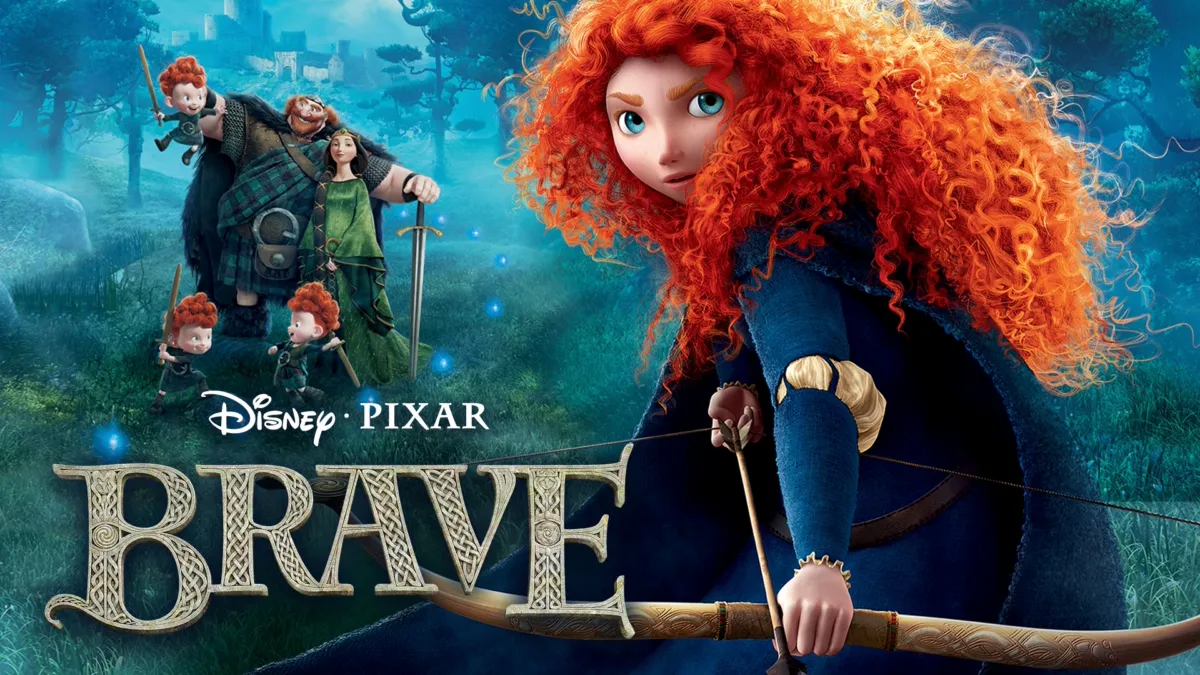
loola-games.info – Brave, released in 2012, marked a significant milestone in the history of Pixar Animation Studios. Directed by Brenda Chapman and later co-directed by Mark Andrews, Brave became Pixar’s first feature film with a female protagonist, breaking new ground in both storytelling and animation. Set against the stunning and magical backdrop of ancient Scotland, Brave tells the tale of Merida, a fiery-haired princess determined to challenge tradition and carve out her own destiny.
At its heart, Brave is a coming-of-age story about the relationship between a mother and daughter, exploring themes of freedom, identity, family, and the consequences of defying tradition. The film’s rich narrative, emotional depth, and visually breathtaking animation created a timeless story that resonated with audiences around the world.
Plot Summary: A Princess’s Struggle for Independence
The Opening: A New Kind of Princess
From the very beginning of Brave, it’s clear that Princess Merida (voiced by Kelly Macdonald) is not a typical Disney princess. She is introduced as a strong-willed and adventurous young woman, far more interested in riding through the forests on horseback and honing her archery skills than in attending courtly duties or preparing for marriage. Unlike many of her Disney counterparts, Merida isn’t waiting to be rescued by a prince; instead, she is determined to forge her own path in life.
Merida’s mother, Queen Elinor (voiced by Emma Thompson), represents the traditional expectations placed upon her daughter. Elinor is a firm believer in royal protocol and responsibilities, and she expects Merida to conform to the norms of the kingdom, which include marrying one of the allied clan leaders to maintain peace. This conflict between mother and daughter sets the stage for the central tension in the story.
The Proposal of Marriage: A Defiant Act of Rebellion
The core of the film’s conflict arises when Queen Elinor arranges for a competition among the sons of the kingdom’s allied clans. The winner of the competition is to marry Merida, as part of a tradition that strengthens political alliances. However, Merida is adamantly opposed to the idea of an arranged marriage and rebels against her mother’s plans.
In a bold act of defiance, Merida enters the archery competition herself and wins, thus claiming her own hand in marriage. This public rejection of tradition deeply embarrasses the clans and strains Merida’s relationship with her mother even further. Feeling misunderstood and desperate to change her fate, Merida runs away into the forest, where she encounters a mysterious witch.
The Witch’s Spell: A Decision with Unexpected Consequences
Hoping to change her mother’s mind, Merida makes a fateful decision when she asks the witch to cast a spell that will “change” Queen Elinor. The witch gives Merida an enchanted cake, which, when eaten, transforms Elinor into a bear—a transformation that is symbolic of the growing disconnect between mother and daughter. However, Merida soon realizes the gravity of her mistake, as the spell not only changes her mother physically but also begins to erase her humanity.
Merida now must race against time to undo the spell before her mother’s transformation becomes permanent. The journey to reverse the curse serves as the film’s emotional heart, as Merida and Elinor—now in bear form—are forced to work together and understand each other in ways they hadn’t before. This shared experience allows them to bridge the gap between their conflicting views and rediscover their bond.
Themes and Symbolism: Family, Freedom, and Tradition
The Complexity of Mother-Daughter Relationships
At the core of Brave is the powerful and often tumultuous relationship between Merida and Queen Elinor. This dynamic explores the generational clash between tradition and self-determination. While Queen Elinor embodies the old ways—where a princess is expected to uphold duty, follow social conventions, and be a symbol of unity—Merida represents a new generation that values individuality and freedom.
The film presents a nuanced portrayal of mother-daughter relationships, emphasizing that while both characters have valid perspectives, their failure to communicate leads to their initial conflict. Queen Elinor sees her role as preparing her daughter for the responsibilities of ruling, while Merida feels trapped and unable to express her true desires. The film’s emotional arc is driven by the realization that both women need to listen to each other and find a balance between duty and independence.
The Search for Identity and Self-Determination
Merida’s desire to change her fate is symbolic of the universal struggle for self-identity. She wants to forge her own path in life, free from the expectations placed upon her by family and society. This theme resonates with audiences because it reflects the internal battle many people face when they seek to break free from societal pressures or traditional roles that don’t align with their personal desires.
Merida’s story is also one of self-reflection. While she initially sees her mother as the source of her problems, she gradually learns that her own actions and stubbornness contributed to their estrangement. The journey she embarks on is not just about reversing a spell, but about growing as a person and understanding the consequences of her actions.
Tradition vs. Change: Finding a Balance
Brave also explores the tension between tradition and change, both within the context of Merida’s personal struggle and in the broader political landscape of the kingdom. The arranged marriage is a symbol of the kingdom’s adherence to old customs, but Merida’s rebellion reflects a desire for progress and self-determination. Ultimately, the film suggests that while traditions are important, they should not stifle individuality or personal freedom.
By the end of the film, Merida and her mother come to a mutual understanding that traditions can evolve. The clans agree that future marriages will not be arranged by obligation but by choice, signaling a shift toward a more modern and equitable view of relationships. This compromise represents the film’s message that progress doesn’t require abandoning the past, but rather adapting it to fit new values.
Visual and Artistic Achievement: A Stunning Portrayal of Scotland
The Lush Landscapes of the Scottish Highlands
One of the most striking elements of Brave is its breathtaking visual design. The film’s setting in ancient Scotland allows for rich and immersive landscapes, from misty forests and towering mountains to windswept coastlines and ancient stone circles. The Pixar animation team paid meticulous attention to detail in creating the look and feel of the Scottish Highlands, drawing inspiration from real-world locations to enhance the film’s authenticity.
The use of natural light, vibrant colors, and dynamic weather effects all contribute to the film’s ethereal atmosphere. The lush greenery, flowing rivers, and dense forests serve as both a beautiful backdrop and an essential part of the story, as nature plays a key role in Merida’s journey. The enchanted forest where Merida meets the witch, in particular, exudes a sense of mystery and magic, capturing the film’s Celtic influences.
The Iconic Animation of Merida’s Hair
Merida’s character design, especially her fiery red hair, became one of the most iconic aspects of the film. Her voluminous, untamed curls are not only a visual marvel but also serve as a reflection of her free-spirited personality. Pixar’s animation team developed new technology specifically to animate Merida’s hair, creating over 1,500 individual strands that move realistically and react to the environment.
Her hair serves as a symbolic representation of her rebellious nature and desire for independence, contrasting sharply with the more polished and controlled appearance of her mother. This visual detail helps reinforce the film’s themes of freedom and self-expression.
The Celtic Influence: Music and Mythology
The film’s Celtic influence extends beyond its setting and character designs. The musical score, composed by Patrick Doyle, incorporates traditional Scottish instruments like bagpipes, fiddles, and harps, creating a soundscape that is both haunting and uplifting. The music enhances the film’s emotional depth, particularly during key moments between Merida and her mother.
Brave also draws on elements of Scottish mythology, such as the mysterious will-o’-the-wisps that guide Merida on her journey. These glowing, otherworldly lights are rooted in Celtic folklore and symbolize the mystical forces at play in the film. The presence of ancient stone circles and the emphasis on nature and magic further align the film with its mythological influences.
Reception and Legacy: A Bold Departure for Pixar
Critical Reception: Praise and Criticism
Upon its release, Brave received generally positive reviews, though it was somewhat polarizing in the context of Pixar’s legacy. Critics praised the film for its stunning animation, emotional depth, and its strong female protagonist. Many applauded Pixar for breaking away from the typical “princess” mold and creating a heroine who was defined by her strength, independence, and desire for personal freedom.
However, some critics noted that Brave felt less ambitious than previous Pixar films in terms of storytelling. While Pixar had become known for its innovative narratives (such as WALL-E, Up, and Toy Story), Brave followed a more traditional fairy-tale structure. Some felt that the film’s plot was somewhat predictable, and that it lacked the inventive twists that had defined Pixar’s earlier work.
A Cultural Milestone: Pixar’s First Female-Driven Story
Despite some mixed reviews, Brave was a significant cultural milestone for Pixar. As the studio’s first film with a female lead and its first to be directed by a woman (Brenda Chapman, who was later replaced as director during production), Brave represented a step toward greater diversity in animated storytelling.
Merida’s character resonated with audiences as a new kind of Disney princess—one who didn’t need a romantic storyline to define her. She became a symbol of independence and courage for young viewers, and her message of self-determination and individuality continues to inspire.
Box Office Success and Awards
Brave was a box office success, grossing over $540 million worldwide. It also won several awards, including the Academy Award for Best Animated Feature and the Golden Globe Award for Best Animated Feature Film. The film’s success cemented its place as a beloved entry in the Pixar canon, and Merida was later inducted as an official Disney Princess, further solidifying her status as a cultural icon.
Conclusion: A Brave New Direction for Pixar
Brave stands as a unique and important film in Pixar’s history, marking a departure from the studio’s typical narrative style while embracing universal themes of family, identity, and freedom. Its visually stunning portrayal of Scotland, its bold female protagonist, and its exploration of complex relationships between mothers and daughters make it a film that resonates with audiences of all ages.
Though it may not be considered as groundbreaking as some of Pixar’s other films, Brave continues to be celebrated for its emotional depth and its empowering message about carving out one’s own destiny. In the end, Brave is a story about the courage to be true to yourself, even when that means challenging the traditions of the past.