
The Battle of Tippecanoe: Harrison’s Defining Moment

loola-games.info – The Battle of Tippecanoe, fought on November 7, 1811, was a pivotal event in American history, especially for William Henry Harrison. This battle, which took place in what is now the state of Indiana, catapulted Harrison to national prominence, earning him the title “Old Tippecanoe” and setting the stage for his later political career, including his successful run for the presidency. It was not just a military engagement; it was a moment that symbolized the conflict between Native American tribes and American expansion, as well as the broader struggles of the young United States in its formative years.

This article will explore the Battle of Tippecanoe in detail, examining its causes, the key figures involved, the course of the battle, and the lasting impact it had on Harrison’s life and the future of American politics.

The Background: Native American Resistance and the Rise of Tecumseh

The early 19th century was a period of significant tension and conflict between Native American tribes and American settlers as the United States expanded westward. The U.S. government, under Presidents Thomas Jefferson and James Madison, sought to secure land for settlers by pushing Native American tribes further west, often through treaties that were not always honored.

In the years leading up to the Battle of Tippecanoe, Native American resistance to this encroachment was rising. Among the most prominent leaders of this resistance was Tecumseh, a Shawnee chief, who sought to unite various Native American tribes across the Midwest and South into a confederation to resist U.S. expansion. Tecumseh’s vision was one of pan-Indian unity, and he called for a return to traditional ways of life, rejecting the influence of European settlers and their culture. His goal was to create a strong, united Native American front that could negotiate with the U.S. on equal terms.

Tecumseh’s brother, Tenskwatawa, known as “The Prophet,” played a key role in his efforts. Tenskwatawa was a spiritual leader who promoted a message of purification and resistance to European influence. He established a religious movement that attracted many Native Americans, especially in the Great Lakes region.

As Tecumseh traveled south to recruit additional tribes to his cause, Tenskwatawa, also known as “The Prophet,” remained behind in the Tippecanoe area (in present-day Indiana), where he continued to lead his followers. The Prophet’s influence grew, and the region became a center for Native American resistance to U.S. policies. The tensions between the Native American confederation and American settlers, particularly in the Northwest Territory, were nearing a breaking point by the time Harrison arrived.

William Henry Harrison’s Role as Governor

William Henry Harrison had been appointed the Governor of the Indiana Territory by President John Adams in 1800. Harrison was tasked with overseeing the settlement of the territory, which had been ceded to the United States following the Treaty of Greenville in 1795. The land was being rapidly settled by Americans, creating significant friction with the Native American tribes that had lived there for centuries.

Harrison’s role in the territory included managing relations with the Native American tribes, which was no easy task. Many of the tribes, particularly those in the region around present-day Indiana, had become increasingly hostile toward the settlers. The situation worsened as Tecumseh’s movement gained traction. Tecumseh sought to create a united confederacy to defend Native American land, and Harrison saw this as a direct challenge to the American government’s territorial ambitions.

In the years leading up to the battle, Harrison had attempted to negotiate treaties with the tribes in the area, but his efforts were largely unsuccessful. Tensions increased, especially with the Shawnee and other tribes aligned with Tecumseh, who rejected Harrison’s offers and continued to resist American expansion. By the time Harrison received reports of growing unrest at Prophetstown, Tecumseh’s settlement along the Tippecanoe River, he knew that military action might soon be necessary.

The Battle of Tippecanoe: The Engagement

The immediate cause of the Battle of Tippecanoe was a series of raids and confrontations between American settlers and the Native American confederation led by Tecumseh’s followers. Harrison, determined to stop the rising threat, led a military force of about 1,000 soldiers to confront The Prophet and his followers at Prophetstown, a settlement near the confluence of the Tippecanoe and Wabash rivers.

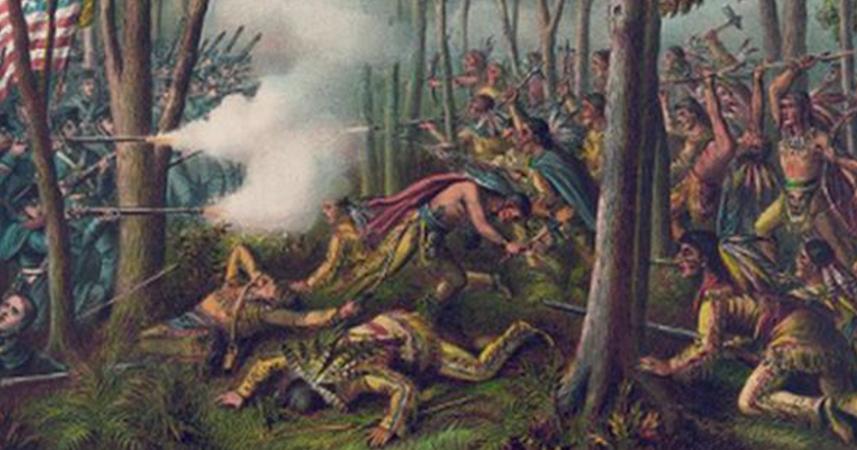
On the morning of November 7, 1811, Harrison’s forces camped outside Prophetstown and prepared for an engagement. The night before, the Native American forces, led by The Prophet, had attempted a preemptive strike against the American camp, but their attack was unsuccessful. The next morning, the battle commenced when the Native Americans, numbering approximately 500 warriors, launched a surprise attack on the American encampment. They hoped to catch the U.S. forces off guard, but Harrison and his soldiers held their ground.

The battle was fierce, with both sides suffering casualties. The Native American forces were able to break through the American defenses at one point, but Harrison’s troops regained their positions and forced the attackers to retreat. The American soldiers eventually pushed the Native Americans back, forcing them to abandon Prophetstown, which was later destroyed by the U.S. forces.

Though the battle was considered a victory for Harrison and the American forces, it was not without significant loss. The Americans had 62 men killed and 126 wounded, while Native American casualties are estimated to have been between 40 and 50, though exact numbers are unknown.

The Aftermath and Impact on Harrison’s Career

While the Battle of Tippecanoe was not a decisive military victory in the traditional sense, it had profound consequences. For William Henry Harrison, it was a defining moment that propelled him into the national spotlight. The victory, combined with the fact that he had successfully resisted Native American resistance in the Northwest Territory, made Harrison a hero. The rallying cry “Tippecanoe and Tyler Too” would later become the slogan for his successful 1840 presidential campaign, which further cemented his legacy as a symbol of American military strength and leadership.

For the Native American confederacy, the battle was a setback, though not a fatal blow. While Prophetstown was destroyed and many of the Native Americans were forced to retreat, Tecumseh’s cause continued to grow, especially after the War of 1812 broke out. Tecumseh fought alongside the British against the United States in that conflict, continuing to resist American expansion until his death in 1813.

The Battle of Tippecanoe also marked the end of the first phase of the resistance to U.S. expansion in the Northwest Territory. Despite Harrison’s military success, the broader issues of Native American land rights and territorial expansion were far from resolved. The battle underscored the deepening rift between Native American tribes and American settlers, a conflict that would continue to shape U.S. policy for decades.

Legacy and Lasting Impact

The Battle of Tippecanoe was a seminal moment in William Henry Harrison’s life, one that shaped his public image and propelled him toward the presidency. His role as the leader who quelled Native American resistance in the region won him significant political support. Harrison’s reputation as a military hero played a key part in his 1840 presidential campaign, which he won by a wide margin, ushering in a new era of populist politics.

The battle also had long-term implications for American policy toward Native Americans. It marked a decisive moment in the series of U.S. military actions aimed at removing Native American tribes from their ancestral lands to make way for white settlers. The conflict set the stage for the forced relocation policies that would later be known as the “Trail of Tears,” a tragic chapter in American history.

Conclusion

The Battle of Tippecanoe was more than just a military engagement; it was a defining moment for both William Henry Harrison and the history of the United States. For Harrison, the victory cemented his reputation as a national hero, setting him on a path to the presidency. For Native Americans, it represented a significant setback in their struggle to preserve their lands and cultures in the face of American expansion.

The battle serves as a reminder of the complexities of American history, where the ideals of progress and democracy often collided with the realities of land acquisition, colonization, and cultural assimilation. Harrison’s role in the Battle of Tippecanoe is forever etched in the annals of American history, marking the moment when his military career defined his legacy and helped shape the future of the nation.
The Military Brilliance of Andrew Jackson

loola-games.info – Andrew Jackson, the seventh president of the United States, is renowned for his military genius and leadership that catapulted him into the political spotlight. Before rising to the presidency, Jackson earned national fame for his battlefield exploits, particularly during the War of 1812. His military brilliance, characterized by bold, unconventional strategies and unyielding determination, cemented his status as a war hero and propelled him into the highest office of the land. This article delves into the military career of Andrew Jackson, from his early years to his legendary victory at the Battle of New Orleans, and explores how his military prowess shaped his path to the White House.

Early Military Experience

The Frontier Soldier

Andrew Jackson’s military career was shaped by the hardships and violence of the American frontier. Born in 1767 in the Carolinas, Jackson grew up in a region that was constantly at odds with British colonial forces and Native American tribes. His childhood was marred by the American Revolution, during which he lost his mother and two brothers, leaving him an orphan by the age of 14. These early experiences left Jackson with a deep sense of patriotism and a lifelong hatred of the British, which would influence his military and political decisions.

Jackson’s first formal military experience came in 1794 when he was appointed as a major general in the Tennessee militia. His early career as a frontier soldier involved skirmishes with Native American tribes, where he honed his skills as a military leader. Jackson’s experiences on the frontier shaped his views on warfare, and he quickly earned a reputation for being a fearless and aggressive commander, willing to take risks in the face of overwhelming odds.

The Creek War

One of the pivotal moments in Jackson’s early military career was his involvement in the Creek War (1813-1814), part of the larger conflict of the War of 1812. The Creek War was a civil war within the Creek Nation between the Red Sticks, who opposed American expansion, and the Lower Creeks, who were allied with the United States. The conflict escalated when the Red Sticks attacked Fort Mims, killing hundreds of settlers.

In response, Jackson led a force of Tennessee militia, allied Creek warriors, and regular U.S. Army troops against the Red Sticks. Despite facing supply shortages, illness, and desertion among his troops, Jackson achieved a decisive victory at the Battle of Horseshoe Bend in 1814. The battle ended with the destruction of the Red Stick faction, and Jackson forced the Creek Nation to cede over 20 million acres of land to the United States, much of which was in present-day Alabama and Georgia.

Jackson’s success in the Creek War showcased his military leadership and determination. It also established him as a national hero and set the stage for his future military and political career.

The War of 1812 and the Battle of New Orleans

Prelude to the Battle

Jackson’s most significant military achievement came during the War of 1812 between the United States and Britain. The war, which was fueled by British interference with American trade and the forced impressment of American sailors into the British Navy, saw many early defeats for the United States. However, Jackson’s leadership would change the course of the war in the southern theater.

After his success in the Creek War, Jackson was appointed as a major general in the regular U.S. Army and was given command of American forces in the South. His leadership was put to the test when British forces, fresh from their victory over Napoleon in Europe, set their sights on New Orleans. The city, located at the mouth of the Mississippi River, was a vital economic and strategic hub for the United States. Its capture would have given the British control over much of the American South.

The Battle of New Orleans: A Decisive Victory

The Battle of New Orleans in January 1815 was the defining moment of Andrew Jackson’s military career and a pivotal event in American history. Despite being heavily outnumbered by the British, Jackson’s forces achieved a stunning victory that solidified his reputation as a military genius.

In preparation for the battle, Jackson implemented a bold strategy that relied on his knowledge of the terrain and the element of surprise. He fortified defensive positions along the Rodriguez Canal, utilizing the natural landscape to create barriers for the advancing British troops. Jackson’s forces were a mix of regular soldiers, militia, free African Americans, Native Americans, and even pirates led by the notorious Jean Lafitte. This diverse coalition was united under Jackson’s command, and despite their differences, they worked together to fend off the British assault.

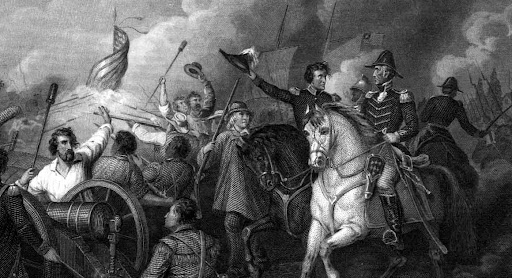
On January 8, 1815, the British launched a frontal assault on Jackson’s well-fortified positions. The American forces, positioned behind earthworks and artillery, unleashed a devastating barrage of gunfire on the advancing British troops. Jackson’s strategic use of artillery, combined with the high ground advantage, proved overwhelming for the British, who suffered heavy casualties. In contrast, American losses were minimal.

The British retreated in defeat, and Jackson’s victory at the Battle of New Orleans became a symbol of American resilience and determination. The battle had little impact on the outcome of the war—since the Treaty of Ghent, which ended the War of 1812, had been signed weeks earlier—but news of the treaty had not yet reached New Orleans. The victory nevertheless had a profound psychological impact on the American public, bolstering national pride and transforming Jackson into a national hero.

The Aftermath and Jackson’s Rise to Fame

Jackson’s victory at New Orleans made him a household name across the United States. He was celebrated as a defender of American honor and independence, and his military success gave him the political capital needed to launch his political career. The victory was seen as a triumph over British imperialism and a validation of the young nation’s strength on the international stage.

Jackson’s military prowess and his appeal as a populist leader resonated with many Americans, particularly in the western and southern states, where frontier settlers viewed him as a protector of their interests. His rise to national prominence after the War of 1812 laid the foundation for his eventual election as the seventh president of the United States in 1828.

Military Brilliance and the Jacksonian Presidency

The Indian Removal Act

Jackson’s military background heavily influenced his presidency, particularly in his approach to Native American relations. His belief in westward expansion and his experiences in the Creek War shaped his views on Native American policy. As president, Jackson championed the Indian Removal Act of 1830, which authorized the forced relocation of Native American tribes from their ancestral lands in the southeastern United States to territories west of the Mississippi River.

While Jackson framed the policy as necessary for the growth of the United States, the forced removal, known as the Trail of Tears, led to the death and suffering of thousands of Native Americans. Jackson’s military mindset, shaped by his frontier experiences, prioritized American expansion over Native American sovereignty, and his role in the Indian Removal has become one of the most controversial aspects of his legacy.

The Nullification Crisis

Jackson’s military leadership also played a crucial role during the Nullification Crisis of 1832-1833, when South Carolina, led by Vice President John C. Calhoun, declared its right to nullify federal tariffs. Jackson, a staunch defender of the Union, responded with a firm stance against nullification, threatening to use military force to enforce federal law. His handling of the crisis demonstrated his belief in a strong central government and his willingness to use military power to preserve the Union.

Conclusion: A Legacy of Military Leadership

Andrew Jackson’s military career was defined by his bold, often unconventional strategies and his unwavering commitment to victory. From the early battles on the frontier to his legendary victory at the Battle of New Orleans, Jackson’s military brilliance earned him a place in American history as one of the nation’s most celebrated war heroes.

However, his military background also shaped his presidency in ways that remain controversial. His aggressive approach to Native American removal, his firm stance on preserving the Union during the Nullification Crisis, and his populist rhetoric all bore the imprint of his military experiences. Jackson’s legacy as a military leader and president is complex—while he is celebrated for his contributions to American military history, his actions as president have sparked ongoing debates about the consequences of his policies.

In the end, Jackson’s military brilliance played a pivotal role in shaping not only his own rise to power but also the trajectory of the United States during a critical period in its history. His influence on American politics and military strategy remains a subject of fascination, making him one of the most iconic—and controversial—figures in American history.