
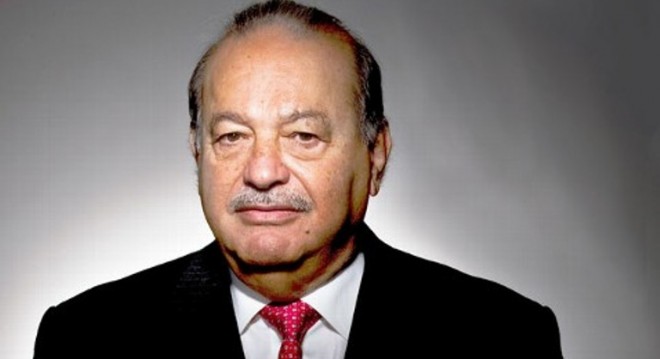
loola-games.info – Carlos Slim Helú is one of the wealthiest individuals in the world and a towering figure in the global business landscape. Hailing from Mexico, Slim’s immense fortune is primarily derived from his extensive investments in telecommunications, though his diversified portfolio spans numerous industries, including retail, construction, and finance. Known for his strategic approach to business and his knack for spotting opportunities, Slim has become one of the most influential entrepreneurs of the 21st century. His rise from humble beginnings to one of the richest people on Earth is a remarkable story of vision, perseverance, and business acumen.
Early Life and Education
Carlos Slim Helú was born on January 28, 1940, in Mexico City, Mexico, into a Lebanese-Mexican family. His father, Julián Slim Haddad, was a successful businessman who taught his children the value of hard work and financial prudence. From an early age, Slim was exposed to the world of business, and his father instilled in him a strong entrepreneurial spirit.
Slim’s early education was marked by his exceptional aptitude for mathematics and business. He attended the National Autonomous University of Mexico (UNAM), where he earned a degree in civil engineering. Although his formal education was rooted in engineering, Slim’s interests and talents lay in finance and business. Even as a student, he began developing a keen interest in investing, and he would later go on to apply his analytical skills to the world of business.
The Road to Success: Building a Telecom Empire
Carlos Slim’s journey to wealth began in the early 1960s when he started investing in a variety of businesses, including real estate, construction, and retail. His early investments allowed him to build a solid financial foundation and acquire the capital necessary for larger ventures. One of his most pivotal investments came in 1990 when he acquired a controlling stake in Telmex, Mexico’s national telephone company, which was being privatized by the government.
At the time, Telmex was facing significant challenges, including outdated infrastructure and inefficient management. Slim saw an opportunity to modernize the company and expand its reach. By investing heavily in infrastructure and technology, he transformed Telmex into a leading telecom provider in Mexico, and it became one of the most profitable companies in the country. Under his leadership, Telmex grew rapidly, and Slim’s wealth soared as the company expanded its operations and services.
Slim’s telecom empire continued to grow in the 1990s and 2000s. He acquired other telecommunications companies, including América Móvil, a major mobile phone operator in Latin America. América Móvil became the largest mobile phone company in the region, providing Slim with a dominant position in the telecom industry. Through strategic acquisitions and investments, Slim consolidated his control over the Latin American telecommunications market and expanded his global influence.
Business Strategy: Diversification and Investment Acumen
While Carlos Slim Helú is most widely known for his achievements in the telecom sector, his business strategy is characterized by diversification and a hands-on approach to managing his investments. Slim is not just a telecom tycoon; he is also a savvy investor with holdings in numerous industries, including banking, mining, construction, and retail.
One of Slim’s key strategies is his ability to identify undervalued assets and acquire them at favorable prices. He has a reputation for being a “value investor,” purchasing companies that others overlook or undervalue, and then turning them around with his expert management. This strategy was evident during the 2008 global financial crisis, when Slim took advantage of market downturns to acquire distressed companies at bargain prices.
Through his conglomerate, Grupo Carso, Slim controls a vast array of companies in various sectors. His investments include ownership stakes in companies such as Grupo Financiero Inbursa (a major financial institution), Grupo Sanborns (a retail and restaurant chain), and the construction giant Impulsora del Desarrollo y el Empleo en América Latina (IDEAL). Slim has also invested in mining, with holdings in silver mining companies, as well as in media, with a significant stake in the Mexican newspaper El Universal.
In addition to his business ventures in Latin America, Slim has made investments in the United States and other global markets. His acquisition of a controlling stake in the New York Times in 2008 is one of his more high-profile investments in the media industry.
Philanthropy and Social Impact
Carlos Slim Helú is not only known for his business success but also for his significant philanthropic efforts. He has dedicated much of his wealth to improving the lives of people in Mexico and around the world. Through the Carlos Slim Foundation, established in 1986, Slim has supported a wide range of initiatives in education, healthcare, and social development.
One of the foundation’s primary focuses is education, with a particular emphasis on improving access to quality education for underprivileged communities. The foundation has funded numerous initiatives to promote digital literacy and vocational training, with the goal of empowering individuals with the skills needed to succeed in the modern economy.
Slim has also made substantial contributions to healthcare, including efforts to improve access to medical care in rural areas of Mexico. His foundation has supported the construction of hospitals and medical centers, as well as initiatives to combat diseases such as diabetes and cancer. Slim has worked to expand healthcare access and improve the quality of care for Mexico’s most vulnerable populations.
In addition to his work in education and healthcare, Slim has been involved in numerous other philanthropic projects. He has supported efforts to promote economic development, reduce poverty, and promote cultural preservation. Slim’s philanthropic work has earned him recognition from organizations such as the United Nations, which has praised his contributions to social development.
Personal Life and Legacy
Carlos Slim Helú is known for his relatively low-key personal life, despite his immense wealth and global influence. He has maintained a private lifestyle, avoiding the public spotlight and choosing to focus on his business and philanthropic efforts. Slim is often described as a humble and modest individual, despite being one of the richest people on the planet.
Slim is married to Soumaya Domit, and the couple has six children. His family plays an important role in the management of his business empire, with several of his children involved in the operations of Grupo Carso and other companies.
Slim’s legacy extends beyond his business success. He is regarded as one of the most influential figures in Latin America and a symbol of the power of entrepreneurship and strategic investment. Through his companies and philanthropic efforts, Slim has had a lasting impact on the economy of Mexico and the wider Latin American region.
Conclusion
Carlos Slim Helú’s rise from humble beginnings to one of the wealthiest people in the world is a testament to his vision, strategic thinking, and business acumen. As the architect of Mexico’s telecom industry and the founder of one of the most diversified conglomerates in the world, Slim has revolutionized numerous industries and created vast wealth through his investments. His approach to business—characterized by value investing, diversification, and a focus on efficiency—has set a blueprint for future entrepreneurs.
Beyond his business achievements, Slim’s philanthropic work reflects his commitment to improving the lives of others, particularly in education and healthcare. His legacy as a businessman and philanthropist will undoubtedly continue to inspire future generations of entrepreneurs and leaders around the world.
