

George Washington: Father of His Country

loola-games.info – George Washington, the first President of the United States, is widely known as the “Father of His Country.” This title reflects not only his pivotal role in leading the American colonies to independence but also his foundational contributions to the creation of the United States as a nation. Washington’s leadership, integrity, and vision helped shape the country’s government, and his influence continues to resonate in American life to this day.

Early Life and Background

Birth and Family Background

George Washington was born on February 22, 1732, in Westmoreland County, Virginia. He came from a family of landowners and was the first child of Augustine Washington and Mary Ball Washington. Washington grew up in a relatively comfortable but not extravagant household in colonial Virginia. His early life was marked by the loss of his father when he was just 11 years old, which had a profound impact on his sense of responsibility.

Though Washington did not receive formal schooling beyond his early teenage years, he was largely self-educated. He spent time learning practical skills such as surveying and land management, which would become valuable in his later life. His early experiences gave him a strong sense of duty, a critical aspect of his later leadership.

Military and Public Service Beginnings

Washington’s early career was rooted in the military and public service. His involvement in the Virginia militia during the French and Indian War, a conflict that took place from 1754 to 1763, provided him with valuable leadership experience. Though his early military career was not without challenges, it helped Washington hone his skills as a leader and strategist.

After the war, Washington returned to his estate at Mount Vernon, but his sense of duty to his country would soon lead him into a more prominent role in the movement for American independence.

The Revolutionary War: The Birth of a Nation

Appointment as Commander-in-Chief

In 1775, after tensions between the American colonies and Great Britain reached a boiling point, the Continental Congress convened to discuss how to respond to the British threat. The colonies had already begun to form militias, but they needed a unifying figure to lead them. George Washington, with his military experience and established reputation for integrity and leadership, was appointed Commander-in-Chief of the Continental Army.

Washington accepted the role with a sense of duty, fully aware of the daunting challenges ahead. The Continental Army was a poorly equipped and undisciplined force, and Washington’s task was to transform it into a fighting force capable of standing up to the might of the British Empire.

Leadership During the Revolutionary War

Washington’s leadership during the Revolutionary War was instrumental in the success of the American cause. The early stages of the war were marked by defeats and setbacks, but Washington’s ability to keep the Continental Army intact and inspired was key to maintaining the revolutionary effort.

One of Washington’s greatest accomplishments was his ability to endure hardship and lead by example. The winter at Valley Forge in 1777-1778, when the Continental Army faced freezing temperatures, lack of food, and disease, is one of the most famous episodes of Washington’s leadership. Despite the dire circumstances, Washington kept the army united and motivated. Under his leadership, the army underwent rigorous training, turning what was once an unorganized and inexperienced group into a disciplined force.

Washington’s strategic acumen was also critical. After a series of early defeats, his bold decision to attack the Hessians in Trenton on Christmas night 1776 proved to be a turning point. The victory at Trenton, followed by another at Princeton, boosted morale and reinvigorated the fight for independence.

The Victory at Yorktown

The defining moment of the Revolutionary War came in 1781, when Washington’s forces, in cooperation with the French army, trapped British General Cornwallis’s forces at the Battle of Yorktown. The British surrender at Yorktown marked the end of major fighting in the war and effectively secured American independence. This victory was the culmination of Washington’s leadership and vision, and it solidified his status as the “Father of His Country.”

Transition to Nation-Building

The Constitutional Convention

After the war, Washington returned to his private life at Mount Vernon. However, the fledgling United States was facing severe challenges, including political instability, economic difficulties, and the inability of the Articles of Confederation to unite the states under a central government. Recognizing the need for a stronger government, Washington was persuaded to attend the Constitutional Convention in 1787, where he was unanimously elected to preside over the proceedings.

The Constitutional Convention was a defining moment in American history, as delegates from the states worked to draft a new Constitution that would create a stronger federal government while preserving individual liberties. Washington’s support for the new Constitution played a critical role in its ratification. Though he was not directly involved in the drafting of the document, his leadership and influence were crucial in bringing the delegates together and ensuring the success of the convention.

The First Presidency

In 1789, the new U.S. Constitution was ratified, and Washington was elected as the country’s first President. His election was unanimous, reflecting the deep respect and admiration the American people had for him. Washington’s presidency was filled with challenges, but he approached the role with the same sense of duty and integrity that had defined his military career.

Setting Precedents

As the first President, Washington faced the daunting task of defining the office of the presidency. There were no precedents to follow, and Washington was keenly aware of the responsibility he carried. One of his most important decisions was to establish a Cabinet, a group of advisors who would help him run the government. Washington appointed Thomas Jefferson as Secretary of State, Alexander Hamilton as Secretary of the Treasury, and Henry Knox as Secretary of War, among others.

Washington also set the precedent of stepping down after two terms in office. This decision, made in 1796, was based on his belief that no one man should hold power indefinitely. His voluntary departure from office reinforced the democratic ideals upon which the country was founded and established the two-term limit for future presidents.

The Farewell Address

In his Farewell Address of 1796, Washington warned the American people against the dangers of political parties and foreign entanglements. He emphasized the importance of national unity and the need for the United States to remain neutral in the affairs of other countries. His advice to avoid permanent alliances with foreign powers and to focus on internal growth and stability became foundational principles in American foreign policy.

Washington’s Legacy as the Father of His Country

A Symbol of Unity

George Washington’s legacy as the “Father of His Country” is rooted in the role he played in uniting the American colonies during the Revolutionary War and in guiding the country through its formative years as a republic. His leadership during the war, his role in drafting the Constitution, and his presidency helped establish the framework for the United States government. Washington’s commitment to the principles of democracy, his dedication to the common good, and his personal sacrifices for the nation made him a symbol of unity and patriotism.

An Example of Leadership and Integrity

Washington’s character was fundamental to his success as a leader. His honesty, humility, and unwavering sense of duty earned him the trust of his fellow Americans and set a standard for future generations of leaders. Washington’s refusal to seek power for its own sake and his insistence on prioritizing the welfare of the nation over personal ambition became key elements of his enduring legacy.

Lasting Impact

The nation that Washington helped to create would go on to become a global superpower, but the principles he set forth—the importance of a strong but limited central government, the value of personal liberty, and the need for national unity—continue to guide the United States to this day. Washington’s vision for a republic of free citizens governed by the rule of law remains a model for democratic nations around the world.

Washington’s legacy as the “Father of His Country” is not merely symbolic; it is embedded in the fabric of American democracy. His leadership, vision, and character shaped the course of history, and his example continues to inspire leaders and citizens alike.
Donald Trump: The Early Years – Real Estate Developer

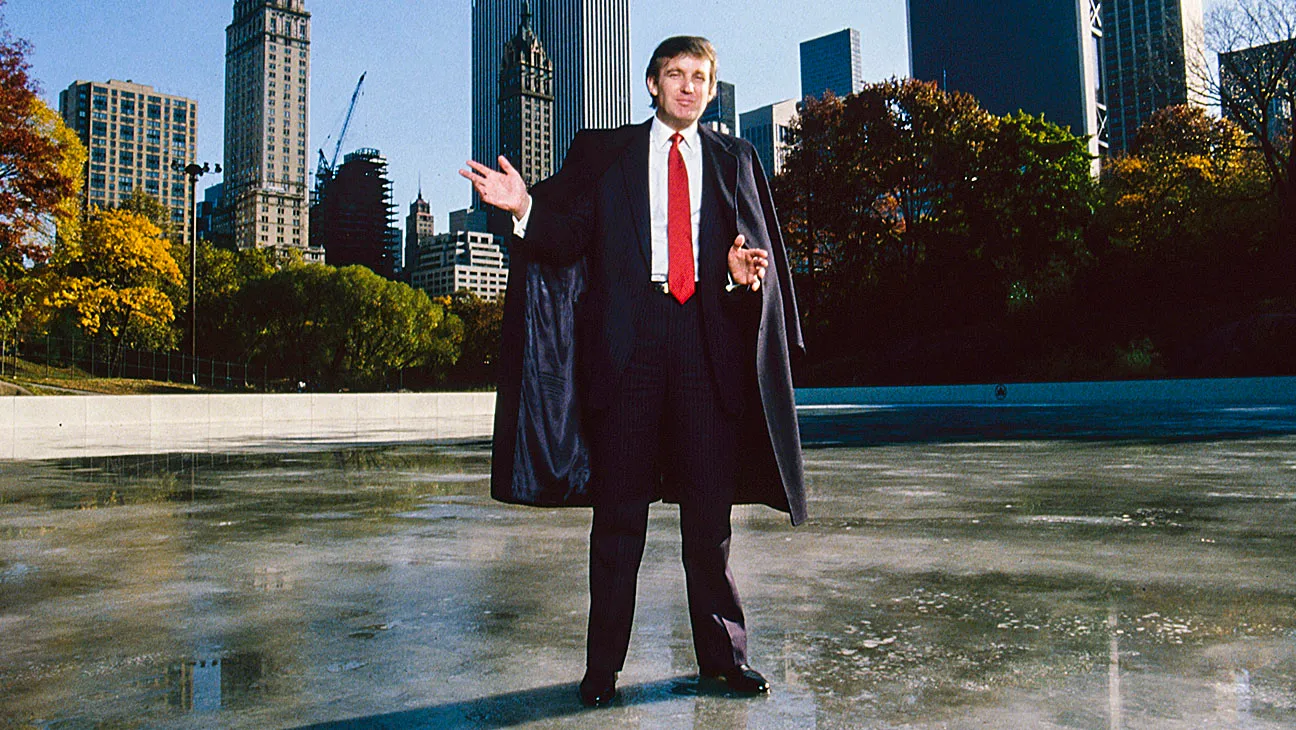
loola-games.info – Donald Trump is synonymous with real estate development, a field in which he made his name and amassed much of his fortune. His career as a real estate developer spans decades and is marked by grandiose projects, controversial business practices, and the creation of one of the most recognizable brands in the world. Trump’s journey in real estate has been full of triumphs and setbacks, but it’s his ambitious and often audacious approach to development that has defined his career.

The Early Years: Entering the Real Estate Industry

The Influence of Fred Trump

Born in 1946 in Queens, New York, Donald Trump grew up in a family with deep roots in the real estate business. His father, Fred Trump, was a successful real estate developer who made his fortune building and managing middle-class housing in Brooklyn, Queens, and Staten Island. Fred’s success in the post-World War II housing boom exposed young Donald to the world of real estate, and from an early age, Donald was involved in his father’s business, learning the basics of property development and management.

Fred Trump’s company, Elizabeth Trump & Son, had a focus on affordable housing, and by the time Donald entered the business, it was well-established in the New York real estate market. However, Donald Trump’s ambitions went beyond the affordable housing market that his father primarily worked in. Donald was determined to make his mark in Manhattan, the epicenter of wealth and opportunity in New York City.

Stepping Up: The Move to Manhattan

In 1971, after graduating from the Wharton School of the University of Pennsylvania with a degree in economics, Donald Trump officially took the reins of the Trump Organization, the family business. He soon moved the company’s headquarters to Manhattan, where he believed the real estate opportunities were more lucrative. This move marked the beginning of his rise as a high-profile developer and a significant departure from his father’s focus on middle-class housing.

Trump’s first major Manhattan project came in 1976 when he acquired the struggling Commodore Hotel. He convinced the Hyatt Hotel Corporation to invest in the renovation of the property, transforming it into the Grand Hyatt New York. The hotel opened in 1980 and was a major success, providing Trump with the capital and credibility to take on larger projects.

Building an Empire: Iconic Developments

Trump Tower: The Crown Jewel

By the mid-1980s, Trump had set his sights on creating a skyscraper that would cement his reputation as a premier real estate developer. The result was Trump Tower, a 68-story mixed-use building on Fifth Avenue in Manhattan. Completed in 1983, Trump Tower was an architectural statement and a symbol of Trump’s desire to create luxury and excess.

The tower, which features luxury residential apartments, office spaces, and retail outlets, is known for its opulent design, including a massive atrium with waterfalls and gold-plated finishes. The building’s construction was a significant gamble, as Trump leveraged considerable debt to finance the project. However, the building was an instant success, attracting wealthy tenants and becoming a central piece of New York City’s skyline.

Trump Tower became both a business triumph and a personal statement for Trump, whose name and image were now synonymous with luxury. The building was more than just a real estate development—it was a brand. The success of Trump Tower established Trump as one of the foremost developers in New York City and helped elevate his profile in the national and international real estate markets.

Expanding into Resorts and Casinos

In the 1980s and 1990s, Trump expanded his real estate portfolio beyond commercial properties and luxury residential buildings. He entered the casino industry, acquiring and developing properties in Atlantic City, New Jersey, a city known for its casino resorts.

One of Trump’s most famous developments in this period was the Trump Taj Mahal, which opened in 1990. The Taj Mahal was a lavish casino resort that Trump hoped would become the largest and most successful in Atlantic City. At the time, it was one of the biggest casinos in the world, and Trump poured hundreds of millions of dollars into its construction.

Despite the initial hype and grandeur, Trump’s casino ventures in Atlantic City faced financial difficulties, and by the mid-1990s, the Trump Organization was forced to declare bankruptcy on several occasions due to the heavy debt burden associated with these properties. Although the Taj Mahal was eventually sold off in 2016, Trump’s experience in the casino industry reflected his willingness to take on high-risk, high-reward ventures.

A Global Reach: Trump’s Real Estate Developments Beyond New York

International Properties and Licensing Deals

In addition to his success in New York and Atlantic City, Donald Trump began to expand his real estate ventures internationally. By the late 1990s and early 2000s, Trump began to license his name to developers around the world. This allowed him to profit from his brand without having to directly invest in every project.

In 2001, Trump partnered with developers in Dubai to open the Trump International Hotel and Tower, which was one of the first international properties to carry the Trump name. Since then, Trump has had his name attached to luxury towers and resorts in cities including Toronto, Panama City, Istanbul, and Jakarta.

Trump’s international developments often catered to wealthy clients looking for exclusive luxury residences or branded hotels. His ability to license his name and brand allowed him to expand his real estate empire globally without assuming the full risk of development costs.

Trump Golf Courses

Trump’s real estate ambitions also extended to the world of golf course development. Starting with the opening of Trump National Golf Club in Briarcliff Manor, New York, Trump went on to acquire and develop numerous golf courses around the world. Some of the most notable golf properties include Trump National Golf Club in Bedminster, New Jersey, and Trump Turnberry in Scotland.

Trump’s golf courses were marketed as exclusive and luxurious, catering to the ultra-wealthy. His properties often included lavish clubhouses, luxury accommodations, and high-end amenities. While the golf courses received mixed reviews in terms of their financial success, they further solidified Trump’s image as a developer of high-end, exclusive properties.

Financial Troubles and Controversies

The 1990s: Bankruptcy and Debt Restructuring

While Trump’s real estate empire continued to grow throughout the 1980s and 1990s, he encountered significant financial problems during this period. Several of his properties, particularly his Atlantic City casinos, were burdened with massive amounts of debt. In 1991, Trump was forced to file for bankruptcy protection on several occasions to restructure his debts.

These bankruptcies were particularly controversial because they allowed Trump to emerge with control over his properties while reducing his liabilities. Critics argued that Trump was using bankruptcy laws to avoid paying creditors, but Trump defended these moves as necessary to keep his businesses afloat and protect jobs. Despite these setbacks, he was able to retain control of many of his most important properties, including Trump Tower.

Legal and Ethical Issues

Over the years, Trump has faced several lawsuits related to his real estate practices. These have included allegations of fraud, unethical business dealings, and violation of building codes and contracts. One of the most high-profile legal issues involved Trump University, a for-profit real estate education program that was accused of defrauding students with false promises about real estate investment success. In 2016, Trump settled a lawsuit related to the program for $25 million.

Additionally, Trump’s real estate developments have faced accusations of discriminatory practices, particularly in his early years in the business. In the 1970s, the Trump Organization was sued by the U.S. Department of Justice for allegedly refusing to rent apartments to African Americans, a case that was settled without an admission of guilt.

Legacy and Impact on Real Estate Development

Trump as a Brand

Perhaps one of Donald Trump’s most significant contributions to real estate development is his ability to turn his name into a globally recognized brand. His real estate projects have become synonymous with luxury, wealth, and excess. The Trump name has become a symbol of exclusivity and opulence, and his developments often cater to the wealthy elite.

Trump’s branding strategies have been a key factor in his success. By licensing his name to developers around the world, he was able to expand his empire without taking on the full risk of each development. The Trump Organization’s brand is now associated not only with real estate but also with luxury goods, resorts, and even political influence.

The Trump Legacy in New York and Beyond

Donald Trump’s most lasting impact on the real estate world is perhaps his role in reshaping Manhattan’s skyline and the global luxury market. Properties like Trump Tower and Trump International Hotel & Tower have set the standard for luxury real estate development. His developments in New York, Atlantic City, and around the world have influenced the real estate industry and helped to redefine the concept of high-end living.

Despite the controversies and financial setbacks, Trump’s influence on the real estate development world is undeniable. His career has been marked by both ambition and audacity, and he has reshaped not only the landscape of real estate but also the public perception of what it means to be a developer.

Boris Johnson: Member of Parliament for Uxbridge & South Ruislip

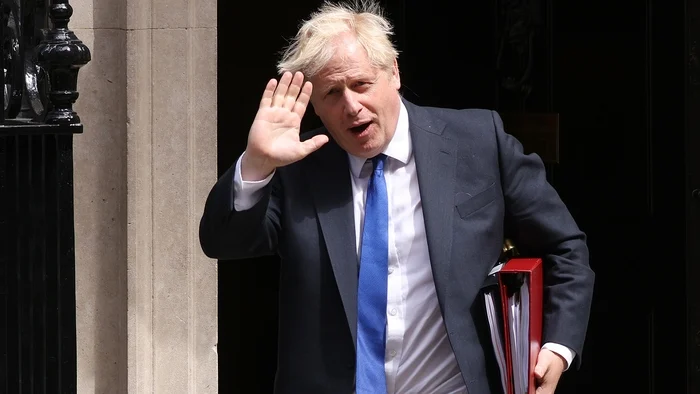
loola-games.info – Boris Johnson’s political career has been marked by his dynamic and sometimes controversial presence in British politics. While much of his legacy is associated with his time as Prime Minister and his leadership during the Brexit referendum, his role as the Member of Parliament (MP) for Uxbridge and South Ruislip is also a significant chapter in his political journey. Representing this constituency for multiple terms, Johnson’s influence on local and national politics has had a lasting impact.

In this article, we delve into Boris Johnson’s time as MP for Uxbridge and South Ruislip, examining how his representation of this constituency shaped his political identity, his connection with his constituents, and his broader career in British politics.

The Constituency: Uxbridge and South Ruislip

1. History of Uxbridge and South Ruislip

The constituency of Uxbridge and South Ruislip is located in west London and has a rich political history. It was originally established in 1918 and has been represented by various political figures from different parties. The area itself is a suburban region, characterized by a mix of residential neighborhoods, green spaces, and thriving local businesses. The constituency has often been regarded as a relatively safe seat for the Conservative Party, and it has witnessed significant political developments over the years.

In the 2010 general election, Boris Johnson returned to Parliament after a brief hiatus, having previously served as an MP for Henley from 2001 to 2008. Following his successful bid for the Mayor of London, Johnson stepped down from his MP role, only to make a political comeback in 2015 when he stood as the Conservative candidate for Uxbridge and South Ruislip. His victory cemented his strong presence in this area, and he has continued to represent the constituency to this day.

2. Demographics and Constituency Characteristics

Uxbridge and South Ruislip is a diverse constituency, home to both urban and suburban voters. The constituency includes areas such as Uxbridge, which is a bustling town with a significant commercial center, and South Ruislip, a largely residential area with good transport links to central London. The constituency also contains pockets of more rural areas, which are typically associated with a different set of political concerns compared to the urban districts.

Given the mix of residential areas, working-class neighborhoods, and suburban locations, the voters of Uxbridge and South Ruislip have diverse priorities. Local issues such as housing, transport, education, and employment have frequently come to the forefront during election cycles. Johnson’s ability to connect with both traditional Conservative voters and those seeking pragmatic, local solutions has been a crucial aspect of his political strategy.

Boris Johnson’s Election to Uxbridge and South Ruislip

1. The 2015 General Election

In 2015, Boris Johnson made his return to Parliament, contesting the seat for Uxbridge and South Ruislip. At the time, Johnson was still serving as the Mayor of London, a position he held from 2008 to 2016. His decision to return to national politics was driven by his desire to contribute more to the political landscape at a national level, especially as debates over Brexit began to intensify.

Despite his prominence in London, Johnson faced competition from candidates of other parties, but his celebrity-like status and strong media presence gave him a significant edge. He won the seat with a comfortable majority, securing his place as the MP for Uxbridge and South Ruislip. This victory marked the beginning of his new phase in Parliament, one that would involve his eventual rise to Prime Minister.

2. The 2017 General Election

In the 2017 general election, Johnson was once again re-elected to represent Uxbridge and South Ruislip. His position as a leading figure in the Conservative Party’s push for Brexit was a key part of his campaign. Throughout the election cycle, Johnson’s reputation as a staunch advocate for Brexit and his larger-than-life personality helped him maintain a strong connection with voters.

While the Conservative Party did not perform as strongly in the 2017 election as it had hoped, Johnson managed to hold onto his seat with a significant majority, despite the overall political uncertainty that had arisen from the Brexit debate. His resilience in retaining his constituency in a time of national upheaval helped solidify his political reputation.

3. The 2019 General Election

The 2019 general election was particularly significant in Boris Johnson’s political career. By this point, he had become Prime Minister and was leading the Conservative Party with a clear mandate to “Get Brexit Done.” His message of delivering the UK’s exit from the European Union resonated strongly with voters in his constituency and across the country.

Johnson’s victory in the 2019 election was a pivotal moment in his leadership, both for the Conservative Party and for his own political career. He was able to secure a commanding majority in Parliament, and Uxbridge and South Ruislip was no exception. Johnson won the seat with a larger majority than in 2017, despite facing increasing scrutiny over his handling of the Brexit process and other political challenges.

Boris Johnson’s Role as MP for Uxbridge and South Ruislip

1. Focus on Local Issues

As the MP for Uxbridge and South Ruislip, Boris Johnson had a strong focus on issues that mattered to his constituents. While his national profile often overshadowed local matters, Johnson made efforts to address key concerns for the people of his constituency. Some of the most pressing issues during his tenure as MP have included:

  • Transport and Infrastructure: Uxbridge is located in close proximity to central London, and transport infrastructure is a significant concern for local residents. Johnson pushed for improvements to local transport services, including better connections with Heathrow Airport and London Underground stations.
  • Housing: As with many other parts of London, housing affordability and availability were key issues for Johnson’s constituents. Johnson’s leadership saw efforts to increase housing supply in the area, though challenges related to housing affordability remained a source of tension.
  • Local Economy and Employment: Johnson advocated for economic policies that would benefit local businesses, including measures to support small and medium-sized enterprises (SMEs). He also worked to improve job prospects in the area, particularly through partnerships with local businesses and educational institutions.

2. Contributions to National Politics

While Johnson’s primary role as an MP was to represent his constituents in Uxbridge and South Ruislip, his leadership of the Conservative Party and subsequent role as Prime Minister meant that his national political influence often took precedence. His stance on Brexit was one of the most defining elements of his leadership, and his role as the MP for Uxbridge and South Ruislip often provided a platform for him to advance his broader political agenda.

Johnson’s work in Parliament as an MP allowed him to shape national debates and policies, particularly on issues related to the EU, the economy, and public services. Despite the pressures of leading the country, Johnson remained engaged with his constituency, attending local events and addressing concerns raised by his constituents.

Boris Johnson’s Legacy as MP for Uxbridge and South Ruislip

1. Local Impact and Representation

Boris Johnson’s tenure as MP for Uxbridge and South Ruislip was marked by his strong political presence and his efforts to balance local issues with national ones. Despite his busy role as Prime Minister, Johnson worked hard to remain connected with his constituents, often attending local events, supporting initiatives to improve local infrastructure, and making sure that the needs of the community were addressed.

His legacy as an MP will likely be defined by his unyielding focus on Brexit, his efforts to deliver on key local priorities, and his larger-than-life personality that endeared him to many in the constituency. While his political career is often associated with national debates, his role as the MP for Uxbridge and South Ruislip was a critical foundation for his political rise.

2. Criticism and Challenges

Like any prominent political figure, Boris Johnson faced criticism during his time as an MP for Uxbridge and South Ruislip. Some voters questioned his ability to fully balance his duties as an MP with his leadership of the country, particularly when local issues were perceived to be overshadowed by his national agenda. Additionally, the challenges arising from Brexit, including divisions within the Conservative Party and the broader public, meant that Johnson’s leadership was often subject to scrutiny.

Despite this, Johnson’s personal popularity and his capacity to communicate his vision helped him retain his position as MP for Uxbridge and South Ruislip for several terms.

Conclusion

Boris Johnson’s time as MP for Uxbridge and South Ruislip represents a significant period in his political career. His tenure as both a local representative and a national leader gave him a unique platform from which to shape the future of the Conservative Party and the United Kingdom. His commitment to Brexit, his focus on local issues, and his leadership style made him a distinctive figure in British politics. Whether remembered for his successes or controversies, his time as MP for Uxbridge and South Ruislip helped cement his status as one of the most influential figures in recent British political history.

Google Maps Renames Gulf of Mexico to Gulf of America

loola-games.info – In a move that has sparked controversy and widespread discussion, Google Maps recently made a significant change to its geographic labeling system by renaming the Gulf of Mexico to the Gulf of America. This change, which appeared on the digital maps as part of an update, has quickly garnered attention from both geopolitical analysts and the general public, raising questions about the motivations behind the decision, the potential implications for geography and international relations, and the role of tech companies in influencing the way we perceive the world.

The renaming of such a prominent geographic feature has fueled debates over nationalism, territorial claims, and the influence of private companies on the perception of international borders. While Google has yet to release an official statement addressing the reasons behind the change, the move has ignited a conversation about the intersection of technology, geopolitics, and cultural identity.

The Gulf of Mexico: A Brief History

The Gulf of Mexico, located in the southeastern region of North America, is one of the largest bodies of water in the world. Bordered by the United States, Mexico, and Cuba, the Gulf has long been an important site for trade, natural resources, and geopolitical interests. Its waters have been the focus of numerous historical events, from early Spanish exploration in the 16th century to the 2010 BP oil spill, one of the largest environmental disasters in history.

The Gulf of Mexico has traditionally been a key element in the relationship between the U.S. and its southern neighbor, Mexico. Over time, it has become deeply intertwined with the identities of the countries that border it. The naming of this body of water has reflected a certain sense of territorial ownership and cultural significance, and for centuries, it has been known as the Gulf of Mexico, a term that ties the water to its historical connection with Mexico.

A Shift in Naming Conventions

The decision by Google Maps to rename the Gulf of Mexico as the Gulf of America is not just a minor adjustment in the digital mapping world. It has prompted a broader conversation about how geography is labeled and who has the authority to make those decisions. Geographic names are often linked to political power, and changes in these names can carry deep cultural and political implications.

The idea of renaming geographic locations is not entirely new. Over the years, various bodies of water, cities, and landmarks have been renamed to reflect changing political climates, cultural shifts, or new historical understandings. However, in this case, Google Maps’ unilateral action has raised eyebrows, especially because the company is a private tech corporation, not a governmental or intergovernmental entity.

Google’s decision to rename the Gulf of Mexico to the Gulf of America may seem like a simple change, but it carries with it a series of consequences. By using the term “America” in the name, the company is introducing a new, sweeping geopolitical concept that consolidates the region under the umbrella of the Americas—a term often used to refer to both North and South America collectively. The new name could be seen as an attempt to emphasize the Gulf’s role as a shared resource for the entire American continent, but it also has the potential to stoke tensions between neighboring countries, particularly the U.S. and Mexico.

Reaction from Mexico and Other Stakeholders

The renaming of the Gulf of Mexico has not gone unnoticed by the Mexican government and its citizens. Many see the name change as a disrespectful dismissal of Mexico’s historical and geographical connection to the Gulf. The Gulf of Mexico has been a significant part of Mexican culture, economy, and history for centuries, and its name carries weight as a symbol of Mexico’s sovereignty over its coastal regions.

In response to the change, various Mexican officials and scholars have expressed their disapproval, with some calling for the restoration of the traditional name. Mexico’s Ministry of Foreign Affairs has not issued an official statement on the matter, but reports indicate that there have been internal discussions regarding how to address the renaming from a diplomatic standpoint.

Mexican historian and geographer Sergio Mora remarked, “The Gulf of Mexico has been an integral part of Mexican identity for hundreds of years. To change its name in a digital platform is an attempt to erase the historical connection we have to this body of water.”

Additionally, environmental and scientific communities have expressed concerns about the long-term effects of this renaming. The Gulf of Mexico is home to a rich ecosystem, and its significance as a key fishing ground, oil production area, and natural resource hub cannot be overstated. Changing the name of such a prominent body of water could potentially alter how global initiatives are organized or funded, especially in relation to environmental protection efforts.

The Role of Tech Companies in Geopolitics

The renaming of the Gulf of Mexico raises important questions about the role that private companies like Google play in shaping the public’s understanding of the world. As one of the largest and most influential tech corporations, Google has an outsized impact on the way people perceive and navigate geography. With services like Google Maps being widely used across the globe, changes to its mapping systems are not merely technical updates—they are cultural events with far-reaching implications.

Google has consistently played a central role in globalizing information, democratizing access to knowledge, and connecting people across borders. But as tech companies grow in power, they also begin to influence more than just the digital sphere. The boundaries of national identity, political sovereignty, and even historical narratives are increasingly shaped by the algorithms and decisions made by these companies.

While Google has made significant strides in promoting accessibility and inclusivity in its products, questions about its responsibility in matters of political and cultural sensitivity remain unresolved. Critics argue that the tech giant should be more transparent about the motivations behind such decisions, particularly when they touch on sensitive geopolitical matters.

Nationalism, Geography, and Identity

The renaming of the Gulf of Mexico touches on broader themes of nationalism and territorial identity. The decision to replace “Mexico” with “America” in the body of water’s name has been seen by some as an assertion of American dominance over the region. This has led to fears that the name change could be a reflection of broader nationalistic tendencies, where the U.S. could be seen as consolidating its influence over Latin America through digital means.

On the other hand, supporters of the name change argue that the term “Gulf of America” better reflects the shared nature of the Gulf for both the United States and Mexico, as well as other countries in the Caribbean and Central America. This argument stresses the importance of collaboration and unity in managing the Gulf’s resources and protecting its fragile ecosystem.

In either case, the issue underscores the complex relationship between geography, politics, and identity. The names we assign to natural features are more than just labels—they carry symbolic weight that can influence national pride, regional cooperation, and international diplomacy.

Google’s Response and Future Outlook

As of now, Google has not made an official statement explaining the rationale behind the renaming of the Gulf of Mexico. The company has not indicated whether the name change is permanent or if it will be subject to further revision. The situation remains fluid, and it is unclear whether Google will bow to public pressure and restore the original name.

Given the backlash and public outcry, there is also the possibility that Google could take a more cautious approach in the future when making decisions about geographic names. Tech companies like Google are increasingly being scrutinized for their power to influence the way people perceive the world, and as such, they may be more reluctant to make decisions that could provoke nationalistic or geopolitical tensions.

In the end, the renaming of the Gulf of Mexico to the Gulf of America is a reminder of the profound impact that digital technologies have on our everyday lives. As we move into an increasingly interconnected world, the role of tech companies in shaping our global landscape will continue to be a subject of ongoing debate and scrutiny.